Walk into any Fabindia or Good Earth store and you will immediately understand two things: Indian home decor is genuinely beautiful, and it is genuinely expensive. A single block-printed cushion cover costs ₹800. A brass diya costs ₹1,200. A hand-woven table runner costs ₹2,500. One decorative wall mirror in a carved wooden frame? Easily ₹4,000 or more.
The useful alternative is to look beyond premium retail and consider the most beautiful Indian homes are rarely decorated with things from stores like these. They are decorated with things from Sunday bazaars, weekly haats, pottery villages, old family trunks, and neighbourhood nurseries — places where the same quality of craftsmanship costs a fraction of the price.
This is a guide to decorating your home the smart desi way. These ideas focus on inexpensive local finds, reuse and small upgrades. The example prices are only rough planning ranges and may exceed ₹500 depending on your city, seller and material quality.
1. Terracotta Pot Cluster — ₹150 to ₹350
Terracotta pots are one of the most underrated decorating tools available in India. Every city has nurseries and roadside plant sellers who stock them for ₹20–₹60 each, depending on size. What most people miss is that a single pot looks ordinary. A thoughtfully arranged cluster of three pots in different sizes immediately looks intentional, warm, and curated.
The formula is simple: buy three terracotta pots in small, medium, and large sizes. Leave the largest one plain — the natural red-brown clay colour is beautiful on its own. Paint the medium pot using chalk paint (available at any craft store for ₹150 per small can) in white, sage green, or a dusty terracotta-orange. Plant a trailing money plant, pothos, or philodendron in the smallest pot and let the vines spill over the side.
Arrange this cluster on a windowsill, a balcony corner, or a shelf. The combination of plain clay, painted texture, and living greenery creates a layered, organic aesthetic that looks like it belongs in a design magazine — and costs under ₹300 total.
Where to buy: Any local nursery or roadside plant seller. Avoid lifestyle stores that sell “artisanal” terracotta — identical pots cost five times more there.
2. Gallery Wall with Indian Art Prints — ₹300 to ₹500
Gallery walls look expensive and complicated. They are actually one of the cheapest ways to completely transform a bare wall. The key is mixing personal photographs with Indian art prints to create something that feels both curated and personal.
Buy 2–3 simple wooden photo frames (₹50–₹80 each from Daiso, local gift shops, or any stationery store) and print your favourite family photographs at a local photo studio — a 5×7 inch print costs ₹15–₹30. For the Indian art element, search for “Warli art print,” “Madhubani painting print,” “Pichwai art digital print,” or “Kalamkari print” on any print-on-demand website. High-quality digital art prints in A4 size cost ₹99–₹199.
Mix 3 photo frames with 2 art print frames on a single wall. Arrange them in an organic, slightly asymmetric cluster rather than a rigid grid — perfect symmetry makes gallery walls look corporate. The slight imperfection is exactly what makes it look curated and intentional rather than assembled by formula.
Pro tip: Lay all the frames on the floor and arrange them before hammering a single nail. Take a photo of the arrangement you like, then transfer it to the wall.
3. Upcycled Glass Bottle Vases — ₹0 to ₹150
Old glass bottles — wine bottles, sauce bottles, large pickle jars — have better proportions for flower arrangements than most store-bought vases. The narrow neck of a wine bottle holds a single stem perfectly upright. The wide mouth of a large pickle jar holds a loose, generous bunch of marigolds or seasonal wildflowers beautifully.
Soak the labels off in warm soapy water, clean the inside thoroughly, and you already have a vase. To elevate the look further, spray paint a bottle using matte black aerosol paint (₹99 at any hardware store or on Amazon). A matte black bottle with a single stem of white tuberose or a small eucalyptus sprig is a genuinely striking combination that looks like a high-end home photoshoot prop.
An alternative finish: wrap the neck and upper body of the bottle tightly with natural jute twine, secured with a small dot of craft glue. This gives a warm, handcrafted, earthy look that pairs beautifully with wildflowers, dried grasses, or cotton stems.
Arrangement idea: Three bottles in different heights — one plain glass, one matte black painted, one wrapped in jute — arranged in a row on a kitchen counter or dining table. It looks like it was styled by an interior designer.
4. Dupattas as Curtains or Wall Art — ₹150 to ₹400
This is the best-kept secret of Indian home decorating. A beautiful printed dupatta — especially a block-printed cotton one, an ajrakh-printed one, or an embroidered phulkari dupatta — makes a more striking curtain than almost anything available at a readymade curtain store in the same price range.
For use as a curtain: hang a slim tension rod or wooden dowel across a window frame. Drape the dupatta over it, letting it fall in soft folds. No sewing, no stitching, no curtain rings required. A block-printed indigo-and-white dupatta against a white wall looks genuinely beautiful and filters afternoon light in a warm, soft way that synthetic curtain fabric never achieves.
For use as a wall hanging: suspend a decorative dupatta from a wooden stick (any round wooden dowel from a hardware store works), tied at both ends with jute rope and hung from a single wall hook. A phulkari dupatta — with its dense, multicoloured embroidery — displayed this way against a plain wall is a piece of art that would cost ₹3,000 or more if it were framed and sold in a Fabindia home section.
Where to find: Sunday markets, local bazaars, Rajasthani craft stalls, and block-printing shops. Budget ₹150–₹350 for a good printed cotton dupatta.
5. Diya and Candle Corner — ₹100 to ₹250
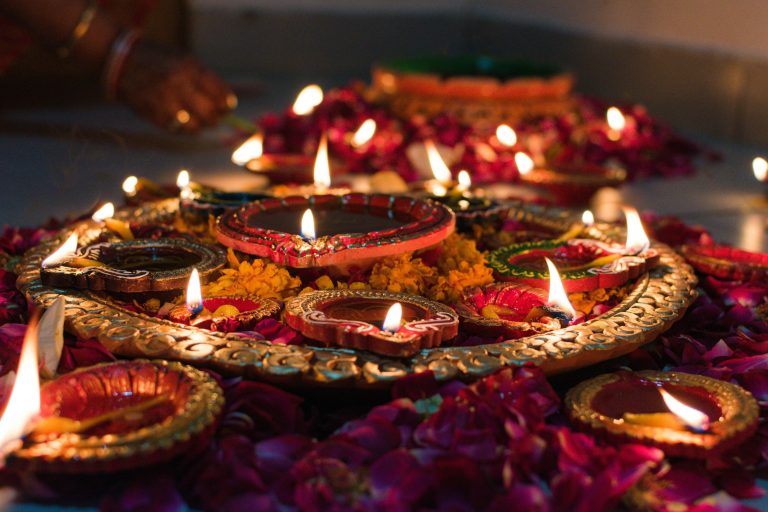
A curated cluster of diyas and candles on a tray is one of the simplest, most impactful decor ideas available — and one that works year-round, not just during Diwali. Unglazed terracotta diyas cost ₹5–₹10 each at any local market or pottery stall. Buy 8–10 in different sizes.
Paint 4–5 of them in gold using a basic gold acrylic paint (a small tube costs ₹30–₹50 at any art supply or stationery shop). Leave the rest plain. Arrange all of them on a dark wooden tray or a flat piece of slate (a cutting board works perfectly). Add 2–3 small pillar candles or tea lights between the diyas.
The combination of plain terracotta, gold-painted clay, and soft candlelight creates a warm, celebratory atmosphere that works on a living room coffee table, a bedroom dresser, or a bathroom ledge. Light it on any evening and your home immediately feels more intentional and beautiful.
6. Toran and Door Hanging — ₹80 to ₹350
Torans — the decorative hangings placed above doorways — are one of the most distinctly Indian forms of home decoration and one of the most underused by urban households. A Rajasthani fabric toran with mirror work and tassels, hung above your main entrance, immediately makes the home feel welcoming and grounded in tradition.
These are available at Rajasthani craft stalls and weekend markets for ₹80–₹200. In cities like Delhi, Mumbai, Bangalore, and Jaipur, you will find them at Dilli Haat, Dadar market, Chickpet, and any weekend craft fair. Macrame door hangings — a more contemporary interpretation of the same idea — are available at Sunday markets for ₹150–₹350.
Beyond the main door, torans work beautifully hung above windows, along the top of bookshelves, or as a divider between two areas of an open-plan living space.
7. Old Sarees as Home Textiles — ₹0
This idea costs nothing and produces some of the most beautiful textiles in any Indian home. Older sarees — especially cotton, linen, or silk ones that are too worn to wear but still vivid in colour and pattern — make extraordinary home furnishings.
A silk saree in deep jewel tones, folded and draped over a sofa, becomes a throw that no store-bought blanket or shawl can match in richness and character. Laid flat across a dining table, a printed cotton saree becomes a table runner that makes every meal feel slightly more special. Hung from a dowel on the wall, a vintage silk saree with a beautiful border becomes a textile artwork.
This is also the most meaningful way to preserve a grandmother’s saree — one that carries memory and history — without leaving it to deteriorate at the back of a shelf.
8. Reading Nook with Floor Cushions and Fairy Lights — ₹300 to ₹500
A reading nook does not require a window seat, built-in shelving, or expensive furniture. You need exactly three things: floor cushions, fairy lights, and a corner.
Buy 2–3 floor cushions (₹100–₹150 each at any home goods store, Pepperfry, or Sunday market). Choose covers in earthy tones — mustard yellow, burnt orange, deep green, or indigo — that work together without perfectly matching. Buy one string of warm white fairy lights (₹150–₹200 on any e-commerce platform). Drape the fairy lights along the corner wall and let them fall loosely. Add a small stool or a stack of books as a side table for your chai cup.
This reading nook costs under ₹500 to create and becomes the most inviting corner in your home. It also photographs beautifully if you ever want to share your space online.
9. Framed Vintage Postcards and Old Calendar Art — ₹100 to ₹300
Old Bollywood film posters, vintage Indian tourism posters, and Raja Ravi Varma calendar prints are legitimate, beautiful wall art — the kind that design-conscious people actively hunt for and pay serious money to find. If you look carefully, you can find them at old bookshops, Sunday paper bazaars, and even inside family trunks.
A Raja Ravi Varma print from a decades-old calendar, framed in a basic wooden frame (₹50–₹80 from any stationery or gift shop), looks striking on any wall. Group two or three of these frames together for a small gallery. The subject matter — Indian classical art, vintage poster design, hand-illustrated typography — carries a visual richness that modern printed art rarely achieves.
If you cannot find originals, search for “Raja Ravi Varma digital print” or “vintage Indian tourism poster print” online and get them printed locally at a photo studio.
10. Brass and Copper from Your Own Kitchen — ₹0
This final idea is the most powerful one in this entire list — and it costs absolutely nothing.
Most Indian kitchens contain brass pots, copper water bottles, bronze serving bowls, and steel containers that have been pushed to the back of shelves and forgotten. These objects are not ordinary. They are handmade, often decades old, made from materials that have been used in Indian homes for thousands of years. They are also genuinely beautiful — warm in colour, rich in texture, and full of the kind of character that modern manufactured objects simply do not have.
Bring them out. Clean the brass with tamarind paste and a pinch of salt — rub, rinse, and watch the metal come alive with warmth. A row of three brass pots in descending sizes on an open kitchen shelf, or a copper tray holding a group of small diyas on a living room table, looks like a deliberate, expensive styling choice.
You already own these things. You just stopped seeing them.
Where to Shop for Budget Indian Home Decor
Delhi: Dilli Haat (craft market with stalls from every state), Sarojini Nagar, Sunday market at Janpath, Lajpat Nagar
Mumbai: Dadar flower and market area, Kurla market, Colaba Causeway for vintage and eclectic finds
Bangalore: Chickpet area, Commercial Street, weekend markets in Koramangala and Indiranagar
Jaipur: Johari Bazaar, Bapu Bazaar, and almost any local market in the old city
Online: Etsy India, Jaypore, and GoCoop for supporting independent artisans directly at fair prices
Final Thought
The most beautiful Indian homes are not designed — they are collected, slowly, from places that matter. A pot from a potter’s stall. A print from an old bazaar. A saree from a grandmother’s trunk. A bottle from last weekend’s dinner, cleaned and given a new job.
Indian home decor has never needed expensive stores. The aesthetic that design magazines now call “artisanal” and “handcrafted” has been the lived reality of Indian households for generations. All this guide does is remind you to look at what you already have — and what is already around you, for very little money — with fresh eyes.
Start with one idea this weekend. The corner will thank you.
SmartDesiLife.com | Practical lifestyle ideas for real Indian homes
Related reading on Smart Desi Life
Continue with these closely related guides:
- Sustainable Living Swaps Every Indian Household Can Start This Week
- Work-From-Home Setup Ideas for Small Indian Apartments
Useful references
For additional background, official information or specialist guidance, these resources may be useful:
- Development Commissioner (Handicrafts), Ministry of Textiles
- UN Environment Programme — Sustainable lifestyles
External resources are provided for reader reference. Guidance, prices, opening hours and other time-sensitive information can change, so check the linked source directly when making a decision.