Lifestyle

Lifestyle

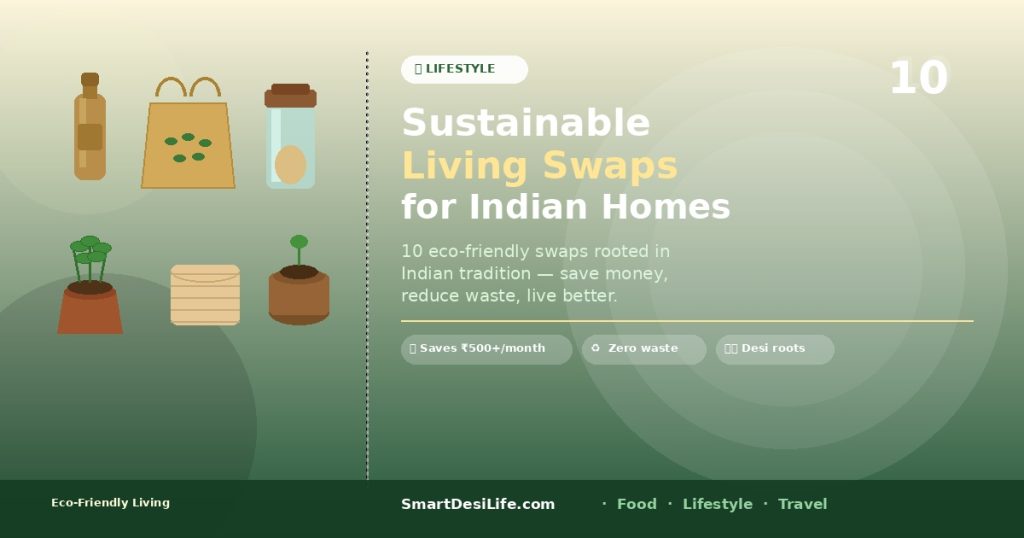
Sustainable Living Swaps Every Indian Household Can Start This Week

I did not become interested in sustainable living because of a documentary or a viral social media post. I became interested because my monthly grocery and household bill was quietly climbing every year, my kitchen bin was overflowing every two days, and I kept throwing away plastic packaging that had no good place to go. The waste felt wrong. The expense felt wrong. And when I actually sat down and looked at what I was buying and throwing away every week, the numbers were genuinely shocking. What I found when I started making changes surprised me. The most sustainable swaps were not expensive imported products from eco-conscious brands. They were things Indian households had been doing for generations — before plastic arrived and before convenience became the default. Most of the changes I made cost nothing or actually saved money. A few required a small upfront investment that paid back within a month. This is not a guide about perfection. It is a guide about small, practical changes that an ordinary Indian household … Read more

10 desi home decor ideas under ₹500 that look expensive — affordable Indian home decoration tips
Lifestyle

10 Desi Home Decor Ideas Under ₹500 That Look Expensive

Walk into any Fabindia or Good Earth store and you will immediately understand two things: Indian home decor is genuinely beautiful, and it is genuinely expensive. A single block-printed cushion cover costs ₹800. A brass diya costs ₹1,200. A hand-woven table runner costs ₹2,500. One decorative wall mirror in a carved wooden frame? Easily ₹4,000 or more. Here is what those stores do not tell you: the most beautiful Indian homes are rarely decorated with things from stores like these. They are decorated with things from Sunday bazaars, weekly haats, pottery villages, old family trunks, and neighbourhood nurseries — places where the same quality of craftsmanship costs a fraction of the price. This is a guide to decorating your home the smart desi way. Every idea here costs under ₹500, looks genuinely beautiful, and uses the rich tradition of Indian craft and everyday objects that most of us already have access to — we just need to start seeing them differently. 1. Terracotta Pot Cluster — ₹150 to ₹350 Terracotta pots are one … Read more

How to celebrate Diwali mindfully without overspending — simple and budget-friendly Diwali ideas
Lifestyle

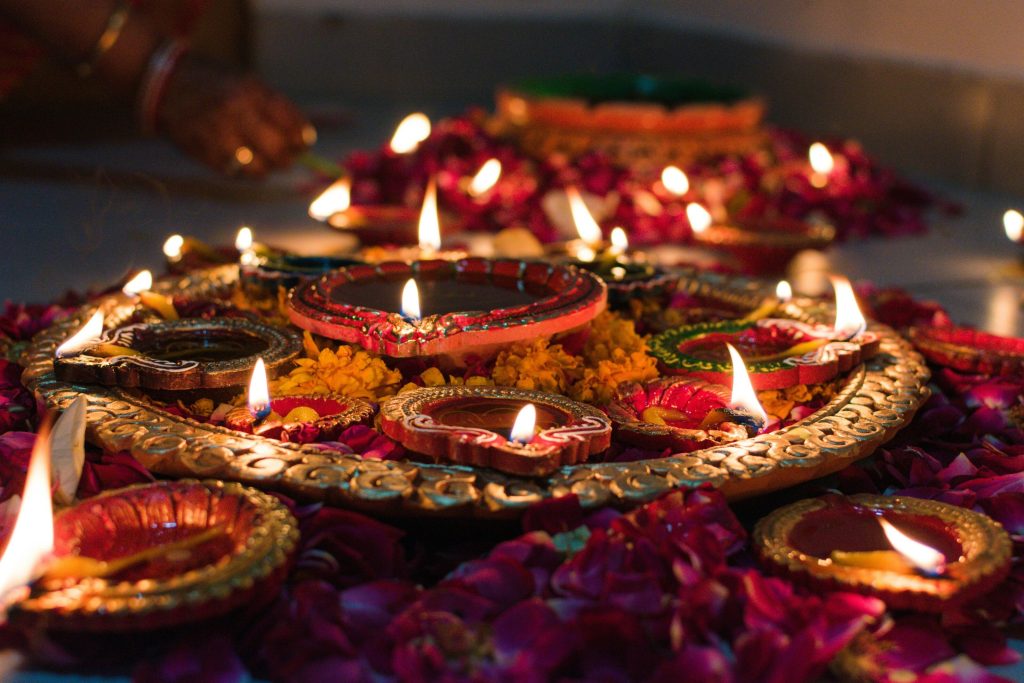
How to Celebrate Diwali Mindfully Without Overspending

Diwali is the most beloved festival in India. Five days of diyas, sweets, new clothes, family gatherings, laughter, and light — it is hard to imagine the year without it. For millions of Indian families, Diwali is not just a festival. It is the emotional centrepiece of the entire year. And yet, for many of those same families, the weeks after Diwali bring something else entirely: credit card bills, financial stress, and the quiet guilt of having spent far more than intended on things that brought far less joy than expected. This is not a lecture about spending less. It is a practical guide to spending better — celebrating Diwali in a way that is genuinely rich in meaning, warmth, and happiness, without requiring three months of financial recovery in November and December. Why Diwali Spending Gets Out of Control Understanding why Diwali overspending happens is the first step to preventing it. The answer, for most families, is not lack of discipline — it is a combination of social pressure, clever marketing, and … Read more

Work-from-home setup ideas for small Indian apartments with compact desk and minimal decor
Lifestyle

Work-From-Home Setup Ideas for Small Indian Apartments

The average Indian urban apartment is 600–900 square feet. It houses 2–4 family members, shares a living room that doubles as a dining room, has a bedroom that probably doubles as a study, and contains roughly zero dedicated workspace. Add to this the constant background noise of a shared home — pressure cooker whistles, TV serials, children doing homework, relatives on video calls — and working from home in India becomes one of the most logistically challenging things a professional can attempt. And yet, millions of Indian professionals are doing it every single day. Some are thriving. Most are just coping. This guide is not about creating a Pinterest-worthy home office with imported standing desks and Scandinavian shelving units. It is about making your actual Indian apartment — with its actual constraints — work for you. Every idea here costs under ₹5,000, requires no major renovation, and can be set up over a single weekend. Why Your WFH Setup Matters More Than You Think Before we get into specific ideas, it is worth … Read more

Skincare routine for Indian skin — effective tips and products that actually work for desi skin tones
Lifestyle

Skincare Routine for Indian Skin: What Actually Works

Most skincare content online is written for Fitzpatrick skin types I–III — pale to medium European or East Asian skin. Indian skin, which spans Fitzpatrick types III–VI, has different concerns, different sensitivities, and different needs. What works for a Korean skincare routine does not automatically work for a Tamilian or a Kashmiri complexion. This guide is written specifically for Indian skin — covering its actual common concerns, what the research says works, and how to build a routine that is effective without being expensive or complicated. The Most Common Indian Skin Concerns Hyperpigmentation and uneven skin tone: The most common concern across Indian skin types. Indian skin contains more active melanocytes (pigment-producing cells), which means it tans faster, develops post-acne marks more readily, and is more prone to melasma (hormonal dark patches, especially in women). Oiliness, especially in humid climates: Most of India — coastal, tropical, or monsoon-affected — creates conditions where skin produces more sebum. Oily T-zones and enlarged pores are extremely common. Acne and post-acne marks: Closely linked to oiliness. Indian … Read more

Morning habits of productive Indian professionals — science-backed daily routine for success
Lifestyle

Morning Habits of Productive Indian Professionals (Science-Backed)

The 5 AM productivity advice flooding the internet was largely written by Silicon Valley executives whose mornings involve a personal trainer, a cold plunge pool, and a smoothie that costs ₹800. It is helpful advice for about 0.3% of the world. This article is for the other 99.7% — specifically, the Indian professional who wakes up between 6 and 7 AM, has a commute ranging from 30 minutes to 2 hours, possibly has children who also need to be ready by 8, and still wants to feel like a functioning, energised human being by the time they reach their desk. Here are the morning habits that genuinely productive Indian professionals use — all of them grounded in research, none of them requiring a cold plunge pool. 1. Start with Water, Not Your Phone Every doctor, sleep researcher, and productivity expert agrees on this: the first thing you reach for in the morning should not be your phone. Checking notifications and social media within minutes of waking activates your brain’s stress and comparison circuitry … Read more

Scroll to Top