LIFESTYLE / THE JOURNAL
Sustainable Living Swaps Every Indian Household Can Start This Week
Practical low-waste household changes that prioritise reuse, repair and buying less instead of expensive eco-products.
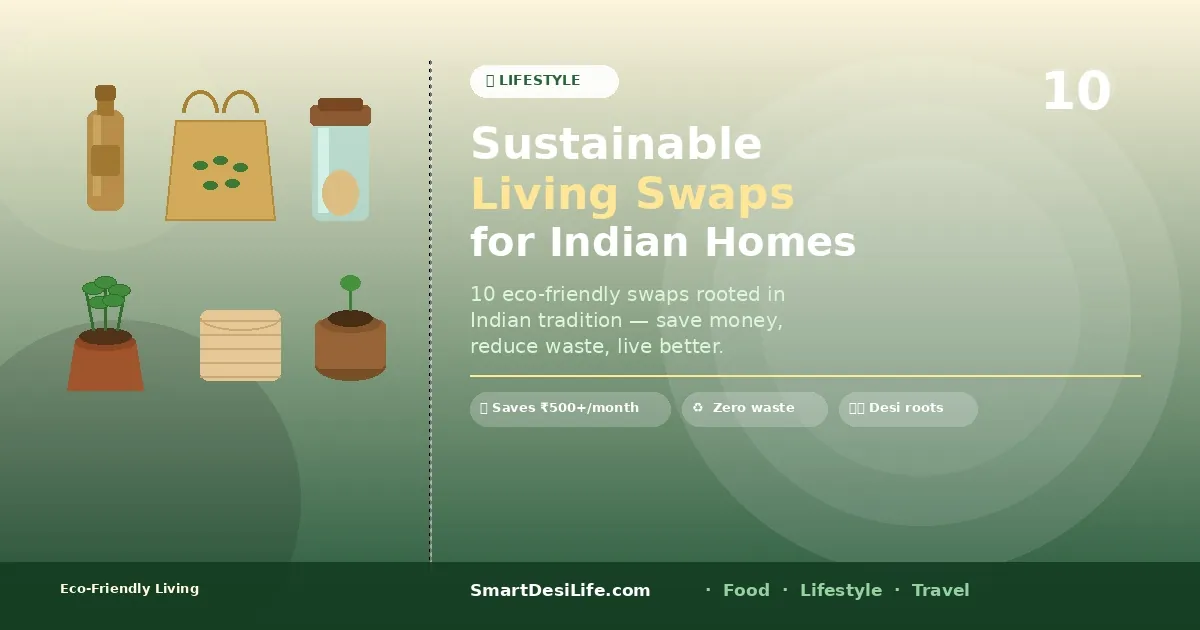
Living with less waste doesn't mean you need to replace everything in your house with expensive eco-friendly products.
In fact, a good place to start is by looking at what you already own.
You might have cloth shopping bags tucked away in a cupboard, glass jars that can be reused for storage, or old cotton clothes that would make perfectly good cleaning cloths. Even a small repair to a school bag or pair of shoes can prevent an unnecessary purchase.
For Indian households, practical low-waste living is often about using things for longer, avoiding duplicate purchases, and making small changes to everyday habits.
You don't have to transform your entire home in a week.
Start with one or two changes that suit your budget, available storage space, and family routine.
Here are ten simple ideas worth trying.
After seven days, choose one recurring problem.
Work on that habit first.
Once the change becomes part of your routine, consider tackling another category.
This approach is easier to maintain than trying to change ten household habits at the same time.
Buying fewer unnecessary products can be a more practical starting point than buying a completely new collection of environmentally marketed items.
What Does Low-Waste Living Actually Mean?
Low-waste living means finding practical ways to reduce the amount of material you throw away. It doesn't mean producing absolutely no waste or buying products simply because they're advertised as sustainable. For example, replacing a perfectly usable plastic container with a new glass jar may not be necessary. If the container is safe, suitable for its purpose, and still in good condition, continuing to use it may be the more sensible decision. The same principle applies to clothes, household tools, bags, and kitchen accessories. Before buying a replacement, ask yourself whether the item you already have can be reused, maintained, or repaired.1. Keep Reusable Shopping Bags Where You'll Remember Them
Most families have at least a few reusable shopping bags at home. The problem is remembering to take one when leaving for the market. You may have several cloth bags neatly folded in a cupboard but still end up taking another bag from the shop because you forgot them. Try keeping reusable bags in places where you're likely to need them. For example:- One near the front door.
- One folded inside your everyday work bag.
- One in your vehicle, if you use one.
- A few larger bags in your regular grocery-shopping kit.
2. Carry a Reusable Water Bottle
Buying packaged water occasionally may be unavoidable, particularly when travelling. But if you regularly purchase bottled water during your commute, at work, or while running errands, carrying your own bottle can reduce those purchases. A durable steel bottle or another suitable reusable bottle can work well. Choose one that:- Fits comfortably in your bag.
- Is easy to open and clean.
- Doesn't leak during travel.
- Holds enough water for your routine.
3. Turn Old Cotton Clothes Into Cleaning Cloths
Before throwing away an old cotton T-shirt or towel, consider whether it can still be useful around the house. Soft cotton fabric works well for dusting furniture, wiping shelves, and cleaning certain household surfaces. You can cut worn-out clothes into manageable pieces and keep them in a small basket. However, not every cleaning cloth should be used for every job. Keep cloths used on food-contact surfaces separate from those used for floors, bathrooms, or other potentially contaminated areas. Wash reusable cloths thoroughly and dry them properly between uses. This simple habit can reduce the need to keep purchasing disposable cleaning wipes or paper towels for routine household cleaning.4. Buy Loose Groceries or Refills When Practical
Many Indian families already buy certain groceries from local kirana stores. Depending on the shop, you may be able to purchase rice, dal, spices, or other dry ingredients in quantities that match your household's needs. Buying only what you'll use can help prevent excess stock from accumulating in cupboards. But buying loose goods isn't automatically better in every situation. Hygiene, storage, product quality, and price still matter. Choose reliable sellers and check that food is stored in clean conditions. At home, keep dry ingredients in suitable, clean containers that protect them from moisture and pests.Avoid Buying More Than You Need
A large packet may appear cheaper per kilogram, but it isn't necessarily a saving if the contents spoil before you can use them. The same applies to bulk purchases advertised as environmentally friendly. Think about how quickly your family uses an ingredient before purchasing a large quantity.5. Reduce Food Waste Before Buying Composting Equipment
Food waste is one of the easiest places to begin making changes at home. Think about how often vegetables are forgotten in the refrigerator or leftovers are discarded because nobody remembered to eat them. You may be able to reduce this waste without buying anything.Try an 'Eat First' Section in Your Fridge
Choose one visible area of your refrigerator for food that should be used soon. This might include:- Leftovers that have been refrigerated promptly.
- Vegetables that need cooking.
- Opened ingredients that are still safe to use.
- Products approaching their use-by dates.
Is Home Composting Necessary?
Not every home needs a compost bin. Composting can be useful when you have the space, time, and appropriate setup to manage it properly. However, poorly maintained composting arrangements can create unpleasant smells or attract pests. If you live in an apartment without suitable space, check whether your housing society or municipality provides wet-waste collection. Reducing avoidable food waste remains worthwhile even if you don't compost at home.6. Use Existing Scrubbers Before Replacing Them
It's easy to see a coconut-fibre scrubber or another low-plastic cleaning product and feel that you should replace everything immediately. But throwing away a perfectly usable cleaning item simply to buy something labelled sustainable defeats part of the purpose. Use your existing products while they're still suitable and hygienic. When they genuinely need replacing, consider alternatives that work for your cleaning needs. Coir or coconut-fibre scrubbers may be useful for certain tasks, but check whether they're suitable for delicate cookware and surfaces. The goal is to choose products that last and work well, rather than purchasing something based entirely on its packaging.7. Try Refillable Cleaning Products Where Available
Some cleaning products are sold in refill packs, concentrates, or through refill stations. These options may reduce the amount of new packaging required for repeated purchases. However, compare the actual amount of product, packaging, price, and instructions before deciding. A refill isn't automatically cheaper or less wasteful in every case. Choose trustworthy products with clear usage instructions.Never Mix Cleaning Chemicals Casually
Trying to make household cleaners from random chemical combinations can be dangerous. In particular, never mix bleach with acidic cleaners or ammonia-based products. Use cleaning products only as directed by their manufacturers. If you reuse a cleaning-product bottle, make sure the container is compatible, correctly labelled, and appropriate for the product. Never store cleaning chemicals in food or drink containers. A low-waste routine should never compromise household safety.8. Repair Clothes, Shoes, Bags, and Household Items
Repairing something you already own can be one of the most practical low-waste habits. A broken zip doesn't always mean a school bag needs replacing. A missing shirt button doesn't make the entire shirt unusable. And a pair of shoes with a loose sole may still have plenty of life left after a suitable repair. Local tailors, cobblers, and repair shops can often help with common problems. Consider repairing:- Shirt buttons and loose seams.
- Trouser hems.
- Bag straps and zips.
- Shoe soles.
- Minor furniture fittings.
- Household items with safely repairable parts.
9. Reuse Jars and Containers Safely
Empty glass jars from certain food products can be useful for storing suitable dry ingredients. After washing and drying them thoroughly, you might use them for items such as spices or other dry pantry goods. You don't need to purchase matching jars simply because a kitchen storage photograph looks attractive. Existing containers can work just as well if they're suitable for the intended use.Check the Container Before Reusing It
Make sure the jar or container is clean and free from damage. Check that the lid fits properly. Don't assume every glass jar is suitable for boiling liquids, pressure canning, freezing, or other temperature extremes. Similarly, plastic containers should be used only for purposes appropriate to their material and condition. A container designed for one type of food or temperature may not be suitable for another. Safe reuse matters more than getting the maximum possible number of uses from every item.10. Buy Fewer Things That You Don't Really Need
Sometimes the best low-waste swap is not buying anything. Before purchasing a new household item, ask three questions. Do I already own something that can do the same job? You might have an existing container, bag, or utensil that meets the need. Can the current item be repaired? A small repair may cost less than buying a replacement. Will I actually use the new item regularly? A product may look useful online but end up sitting unused in a cupboard. Pausing before buying can reduce duplicate purchases and unnecessary household clutter. It also helps you focus on items that genuinely improve your daily routine.Low-Waste Living on a Budget: Does It Really Save Money?
Many low-waste habits can save money because they reduce repeated purchases. Carrying a water bottle may reduce spending on packaged water. Using groceries before they spoil can reduce unnecessary food costs. Repairing a bag may be cheaper than replacing it. But not every sustainable alternative is inexpensive. Some reusable products cost more upfront, and the savings depend on how often you use them and how long they last. Instead of assuming an eco-friendly product must be cheaper, compare its full cost and expected useful life. It's also worth considering whether you need to make the purchase at all.Start With a Seven-Day Household Waste Audit
If you're unsure where to begin, look at what your household throws away during an ordinary week. You don't need to weigh every item or create a detailed spreadsheet. Simply notice the most common types of waste.| Waste you notice | Possible change |
|---|---|
| Packaged water bottles | Carry a refillable bottle when safe water is available |
| Spoiled vegetables | Review grocery quantities and meal plans |
| Food-delivery packaging | Combine suitable orders or consider pickup when practical |
| Disposable cleaning wipes | Use washable cloths for appropriate cleaning jobs |
| Unnecessary shopping bags | Keep reusable bags near the door |
| Half-used products | Finish existing supplies before buying replacements |
Separate Household Waste According to Local Rules
Reducing waste is important, but proper waste segregation also matters. Many Indian municipalities ask households to separate different types of waste. The categories and collection procedures vary by city and local authority. You may need to separate biodegradable waste, dry recyclable materials, and certain hazardous household items. Items such as batteries, electronic waste, and chemical containers may require special collection arrangements. Don't assume that a generic three-bin system from another city automatically meets the rules where you live. Check your municipality's waste-collection instructions and follow the system available in your area. Clean, correctly separated materials are generally easier to handle through appropriate waste-management processes.Reduce Water and Electricity Waste Without Compromising Safety
Low-waste living isn't limited to the things you throw into the bin. You can also look for unnecessary water and electricity use around the house. Some simple examples include switching off lights when they're not needed, fixing leaking taps, and using washing machines with appropriate loads. However, don't compromise safety or comfort simply to reduce consumption. For instance, reducing ventilation in a very hot or poorly ventilated room may create health and comfort problems. Avoid unsafe electrical repairs or shortcuts. The goal is to reduce genuine waste, not remove things your household needs.How to Reduce Packaging From Online Shopping and Deliveries
Food delivery and online shopping can create a considerable amount of packaging in some households. If this is a frequent source of waste for you, look at your ordering habits. You might be able to combine purchases, choose suitable pickup options, or avoid placing several separate orders for items you need together. For frequently used products, larger packs may sometimes make sense. But don't purchase more than your household can safely store and use. Buying a large quantity of food that eventually expires isn't necessarily an improvement over buying smaller packages. Consider convenience, food safety, cost, and actual household consumption together.Consider Second-Hand Buying and Community Sharing
Not every household item needs to be purchased new. Books, certain furniture, occasional-use tools, and some children's items may be available through local second-hand groups or community networks. You might also be able to borrow or share items used only a few times a year. For example, a tool needed for one small household project may not justify a permanent purchase. However, inspect second-hand goods carefully. Electrical appliances, helmets, child car seats, and other safety-critical products require particular caution because damage or missing safety information may not be visible. Only use second-hand items when you can establish that they're suitable and safe.What Not to Buy Just Because It's Called Sustainable
A sustainable-looking product isn't automatically a necessary purchase. Before shopping, consider whether you're replacing something that still works.| Product you might consider | Check first |
|---|---|
| New reusable water bottle | Is your current bottle still suitable? |
| Matching glass storage jars | Can your existing containers be used safely? |
| Special zero-waste accessories | Do they duplicate something you already own? |
| Large bulk grocery packs | Can your household finish and store them safely? |
| New eco-friendly shopping bags | Do you already have reusable bags? |
Make One Household Rule Everyone Can Remember
Complicated sustainability checklists can be difficult to follow when everyone in the family has a different routine. A simple household rule may work better. For example: "Carry a shopping bag." "Check the fridge before buying vegetables." "Repair before replacing." "Finish the opened packet first." Choose one that addresses a real problem in your home. When the rule becomes familiar, it requires less effort to remember. You can always introduce another habit later.How to Know Whether Your Low-Waste Habits Are Working
There's no need to count the number of eco-friendly products you've purchased. Instead, pay attention to what your household no longer needs to buy or throw away as often. Are you purchasing fewer packaged water bottles? Are fewer vegetables spoiling in the refrigerator? Have you stopped collecting duplicate cleaning products? Are clothes and household items lasting longer because you're repairing them? These changes can be useful indicators of progress. If you want to track results, compare your normal household purchases and waste habits before and after a change. Avoid claiming a specific environmental saving without appropriate measurements. A few practical improvements are more valuable than an impressive-sounding number that hasn't been verified.Common Low-Waste Living Mistakes to Avoid
Replacing Useful Things Too Quickly
Don't throw away a functional item just because a greener-looking alternative is available. Use what you already own when it's safe and practical.Buying Too Much in Bulk
Large purchases can create storage problems and food waste when your household can't finish the products in time. Buy quantities that suit your actual consumption.Ignoring Hygiene While Reusing Products
Reusable cloths, bottles, and containers still require proper cleaning and maintenance. Don't reuse items for purposes they weren't designed for.Starting Too Many Changes at Once
Trying to change your shopping, cooking, cleaning, and waste disposal habits in one week can be overwhelming. Focus on one or two practical changes first.Following Waste Rules From Another City
Local waste collection systems aren't identical everywhere. Check the instructions that apply to your municipality or housing society.Final Thoughts
Low-waste living doesn't have to begin with a shopping list. For many Indian households, the simplest improvements involve using existing things more carefully. Carry the cloth bags you already have. Repair clothes and bags when practical. Finish groceries before buying duplicates. Reuse suitable containers and pay attention to what regularly ends up in the waste bin. Not every change will save money, and not every reusable alternative will suit your household. What matters is choosing habits that are safe, affordable, and easy to maintain. Start with one small change this week. Once it becomes routine, move on to the next. Over time, reducing unnecessary purchases and making better use of what you own can become a normal part of everyday household life.Useful References
- United Nations Environment Programme (UNEP) – Sustainable Lifestyles
- Food Safety and Standards Authority of India (FSSAI) – Eat Right India
— END OF STORY —
Have a factual correction or suggestion? Get in touch.