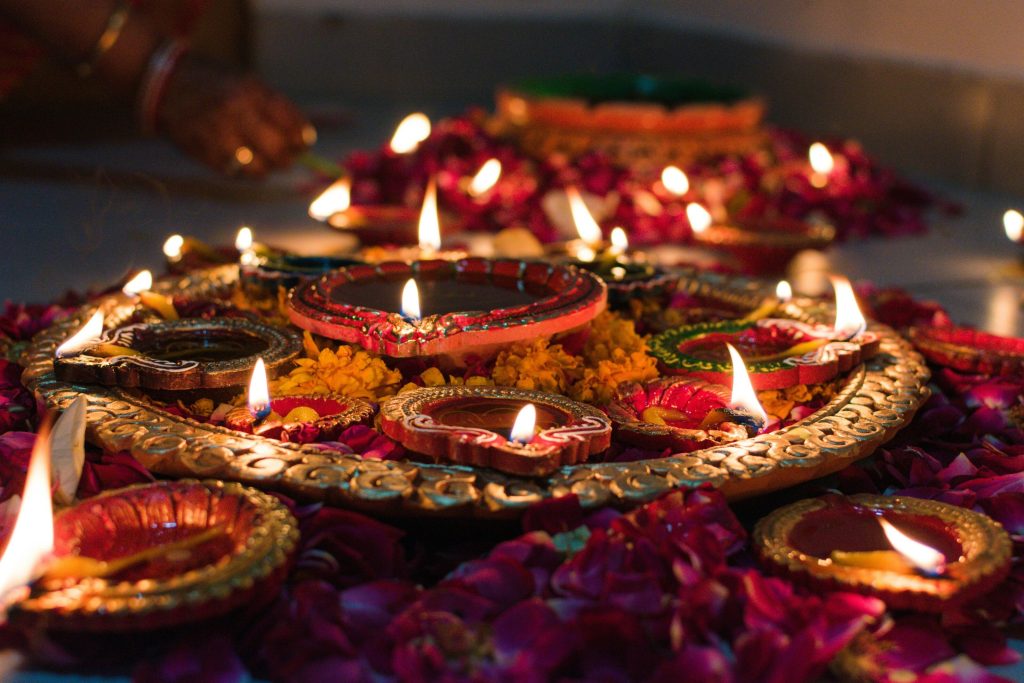
Diwali is the most beloved festival in India. Five days of diyas, sweets, new clothes, family gatherings, laughter, and light — it is hard to imagine the year without it. For millions of Indian families, Diwali is not just a festival. It is the emotional centrepiece of the entire year.
And yet, for many of those same families, the weeks after Diwali bring something else entirely: credit card bills, financial stress, and the quiet guilt of having spent far more than intended on things that brought far less joy than expected.
This is not a lecture about spending less. It is a practical guide to spending better — celebrating Diwali in a way that is genuinely rich in meaning, warmth, and happiness, without requiring three months of financial recovery in November and December.
Why Diwali Spending Gets Out of Control
Understanding why Diwali overspending happens is the first step to preventing it. The answer, for most families, is not lack of discipline — it is a combination of social pressure, clever marketing, and the deep cultural belief that spending more shows love and respect.
Indian advertising spends enormous budgets in the six weeks before Diwali precisely because it works. Every brand — jewellers, clothing stores, electronics companies, sweet shops — frames Diwali spending as an act of love and generosity. “Is Diwali par apno ko dil se gift karo.” The subtext is always the same: the more you spend, the more you care.
Then there is the comparison trap. What did your neighbour gift their relatives? What kind of dry fruit boxes did your colleague send to clients? What does your building’s common area look like this year? Social comparison during festival season is relentless and almost impossible to fully escape.
The result can be a festival budget that grows through many small, individually reasonable purchases. A significant portion of this spending is financed by credit cards or buy-now-pay-later schemes, which means the financial hangover extends well into the new year.
The good news is that none of this is inevitable. With a little intentionality, you can celebrate a Diwali that is more meaningful and more joyful than the expensive version — and significantly cheaper.
Step 1: Set a Real Diwali Budget — In Writing — Before You Buy Anything
This sounds obvious. Almost nobody does it.
The reason is that Diwali spending feels different from regular spending. Each purchase seems small and justified on its own: a ₹500 gift box here, ₹800 of fairy lights there, a ₹1,200 puja thali, a new kurta for ₹2,000 because the old one has a small stain. None of these feel like overspending in the moment. Together, they add up to ₹20,000 before you have noticed.
The solution is to decide your total Diwali budget before you buy anything — and write it down. Not in a mental note. On paper, or in your phone’s notes app, somewhere you can refer back to it.
Break the total into categories:
- Gifts (specify: only close family, or extended family too?)
- Sweets and snacks (homemade or purchased?)
- Decoration (diyas, lights, rangoli)
- Puja essentials (flowers, incense, prasad, pooja thali items)
- New clothes (one outfit or multiple?)
- Firecrackers (or skip entirely?)
- Charitable giving (many families set aside a portion for donation)
Having a number for each category forces you to make conscious trade-offs rather than unconscious impulse purchases. It also creates a natural conversation point with your partner or family: “We said ₹2,000 for gifts — who are we prioritising?”
Step 2: Make Sweets at Home — It Is Cheaper, Tastier, and More Memorable
Premium mithai shops in Indian cities charge ₹600–₹2,000 per kilogram for Diwali sweets. Homemade sweets can sometimes cost less than premium gift boxes, but ingredient prices vary by city and quality. Compare current ingredient prices before assuming homemade sweets are always cheaper.
The math is striking. But the financial saving is actually the smaller reason to make sweets at home.
Homemade Diwali sweets carry something that no branded mithai box ever can: the memory of making them. When you gift a box of besan ladoos that your mother rolled by hand, or a tin of chakli that you made together on a Sunday morning, the gift carries the story of its making. Recipients remember this. A homemade gift can feel more personal when the recipient values the time and effort behind it.
Easy Diwali sweets to make at home:
Besan Ladoo — Roast 2 cups of besan in ghee on low heat for 20 minutes, stirring constantly until golden and fragrant. Cool slightly, mix with powdered sugar, cardamom, and chopped cashews. Shape into balls while still warm. Takes 35 minutes and stores for 2 weeks.
Coconut Barfi — Cook desiccated coconut with sweetened condensed milk and cardamom on low heat, stirring until the mixture leaves the sides of the pan. Pour into a greased tray, press flat, refrigerate for 2 hours, and cut into squares. Impressive, easy, and costs under ₹150 for a full tray.
Atta Ladoo — Roast whole wheat flour in ghee until golden. Mix with powdered sugar, ghee, chopped dry fruits, and cardamom. Shape into balls. These are nutritious, not too sweet, and genuinely beloved by all age groups.
Tip: Organise a family sweet-making session — ideally on the Saturday before Diwali week. Assign roles: children roll ladoos, teenagers measure ingredients, elders supervise roasting and share stories from past Diwalis. The session itself becomes a memory that outlasts any purchased gift.
Step 3: Decorate with Local Market Diyas, Not Mall Imports
Walk through any Indian mall in October and you will find elaborately decorated, painted, imported diyas selling for ₹50–₹200 each. They are undeniably attractive. They are also completely unnecessary.
Traditional unglazed terracotta diyas from local potters and weekly bazaars cost ₹3–₹10 each. They are handmade, biodegradable, and carry the fingerprints of the craftsperson who shaped them. Thirty of these diyas — enough to light up your entire home — cost under ₹300. Decorated retail versions may cost substantially more, depending on the seller and design.
Beyond the cost difference, buying from local potters has a dimension of meaning that buying from a mall does not. Potter families across India depend on Diwali season for a significant portion of their annual income. When you buy from them directly — at a street market, a craft fair, or a roadside stall — your ₹200 goes directly to a family rather than to a supply chain.
Complete Diwali home decoration for under ₹600:
- 30–40 terracotta diyas from local market: ₹150–₹300
- Rangoli colours (a packet of assorted colours lasts multiple years): ₹50–₹80
- Marigold garlands from the neighbourhood flower vendor: ₹80–₹150
- Fairy lights (if you do not already have them — most households do): ₹150–₹250
This decoration, created with care and lit on Diwali evening, looks more beautiful than anything a mall display can offer. The warm glow of thirty real diyas is simply incomparable.
Step 4: Rethink Your Gifting — Give Less, But Give Better
The obligation gift is one of the most financially and emotionally draining aspects of modern Diwali. The dry fruit box sent to every colleague and distant relative — a transaction disguised as generosity — generates more paperwork than warmth.
The alternative is not skipping gifts. It is giving fewer, more thoughtful ones to the people who actually matter.
Genuinely meaningful Diwali gifts that cost under ₹500:
A jar of homemade pickle, murabba, or ghee, with a handwritten label and a small note. This gift says: I spent time making this for you. Almost everyone appreciates it more than a branded box.
A small indoor plant in a terracotta pot. A money plant, a peace lily, or a small succulent in a painted terracotta pot costs ₹80–₹200 total and lasts for years. Every time it is watered, the recipient thinks of you.
A handwritten letter or card. For your closest people — parents, a best friend, a sibling — a handwritten letter describing what they mean to you costs almost nothing and is genuinely priceless. Many people keep these letters for decades.
A shared experience instead of an object. Plan a dinner together, a day trip after Diwali, a cooking session, a film you both want to see. Experiences create memories in a way that objects rarely do.
Who actually deserves a gift? Be honest with yourself about this. Close family: yes. Close friends you genuinely love: yes. Colleagues you rarely speak to: probably not. Distant relatives with whom your relationship is purely obligatory: the gift is not required. A warm WhatsApp message on Diwali morning is sufficient and more genuine.
Step 5: Think Carefully About Firecrackers
This section is not about pollution, though the air quality data for Diwali night in Indian cities is genuinely alarming. It is about value.
₹2,000 worth of firecrackers provides approximately 15–25 minutes of noise and light. The experience is over. The money is gone. For many families, the firecrackers budget is the single largest Diwali expense after gifts, despite delivering the shortest-lived pleasure.
If firecrackers are a genuinely beloved part of your Diwali — if your children look forward to them all year, if they create real joy and connection — then set a budget, buy thoughtfully, and enjoy them fully.
But if you are honest with yourself and the firecrackers are more about habit, expectation, and not wanting to be the household that did not burst crackers — consider what that ₹2,000 could do instead. A family dinner at a restaurant you normally consider too expensive. Better gifts for the people you love. A contribution to a local charity or a diya-maker’s family. Or simply — savings.
Step 6: Wear Something You Already Own
New clothes for Diwali is a tradition that made perfect sense when clothing was expensive and people owned very little. Most urban Indian families today have wardrobes full of beautiful ethnic wear that gets worn once or twice and then sits for years.
Before buying new, open your cupboard fully. That silk saree from a cousin’s wedding three years ago. The embroidered kurta from last Dussehra. The lehenga that has been in a bag since a family function. Any of these, worn with care and fresh accessories, feels genuinely new when you have not worn it in months.
If buying something new is important to you — if it is part of the celebration and brings you real joy — then buy one thing you truly love rather than three things that are merely adequate. Quality and intention matter more than quantity.
Step 7: Make Space for the Things That Actually Make Diwali Special
Ask anyone what their best Diwali memory is, and almost nobody describes a gift they received or a firecracker they burst. They describe a feeling: making chakli with their grandmother, the smell of ghee diyas being lit as darkness fell, the sound of the whole family reciting the puja together, cousins staying up past midnight playing cards, the specific way their mother arranged the rangoli every year.
These memories cost nothing. They require only time, presence, and attention.
The most mindful thing you can do this Diwali is protect space for these experiences. Do not let the logistics of purchasing, wrapping, distributing, and receiving crowd out the actual festival. Light the diyas slowly. Sit together for the puja. Make the sweets as a family. Tell the children the story of why Diwali is celebrated. Have a meal together without phones on the table.
This is the celebration that people remember for decades. And it is entirely free.
Your Mindful Diwali Budget at a Glance
| Category | Mindful Budget | Notes |
|---|---|---|
| Homemade mithai ingredients | ₹500–₹800 | For home + gifting |
| Diyas and decoration | ₹300–₹600 | Local market, not mall |
| Gifts (close family only) | ₹1,000–₹2,500 | Fewer, more thoughtful |
| Puja essentials | ₹300–₹500 | Flowers, incense, prasad |
| Firecrackers | ₹0–₹1,000 | Optional — your choice |
| New outfit | ₹0–₹2,000 | Only if genuinely wanted |
| Charitable giving | ₹200–₹500 | Potters, local causes |
| Total | ₹2,300–₹7,900 | vs. average ₹20,000+ |
Final Thought
Diwali is a festival of light — real light, the kind that comes from a flame cupped in two hands and placed carefully on a step. It is the warmth of a home full of family. It is the smell of ghee and flowers and incense. It is the particular quality of an Indian October night when every window in every building is glowing.
None of that requires a credit card. All of it requires presence.
Celebrate fully. Spend intentionally. The Diwali that your children remember will not be the one where you spent the most. It will be the one where you were most there.
Shubh Diwali from SmartDesiLife.
SmartDesiLife.com | Practical lifestyle advice for real Indian families
Related reading on Smart Desi Life
Continue with these closely related guides:
- Sustainable Living Swaps Every Indian Household Can Start This Week
- 10 Desi Home Decor Ideas Under ₹500 That Look Expensive
Useful references
For additional background, official information or specialist guidance, these resources may be useful:
- Reserve Bank of India — Financial Awareness booklet
- UN Environment Programme — Sustainable lifestyles
External resources are provided for reader reference. Guidance, prices, opening hours and other time-sensitive information can change, so check the linked source directly when making a decision.