LIFESTYLE / THE JOURNAL
How to Organise a Small Indian Kitchen by Cooking Zones, Not Matching Containers
A no-renovation system for small Indian kitchens using cooking zones, frequency-based storage, a measurement worksheet and a no-buy audit before new organisers.
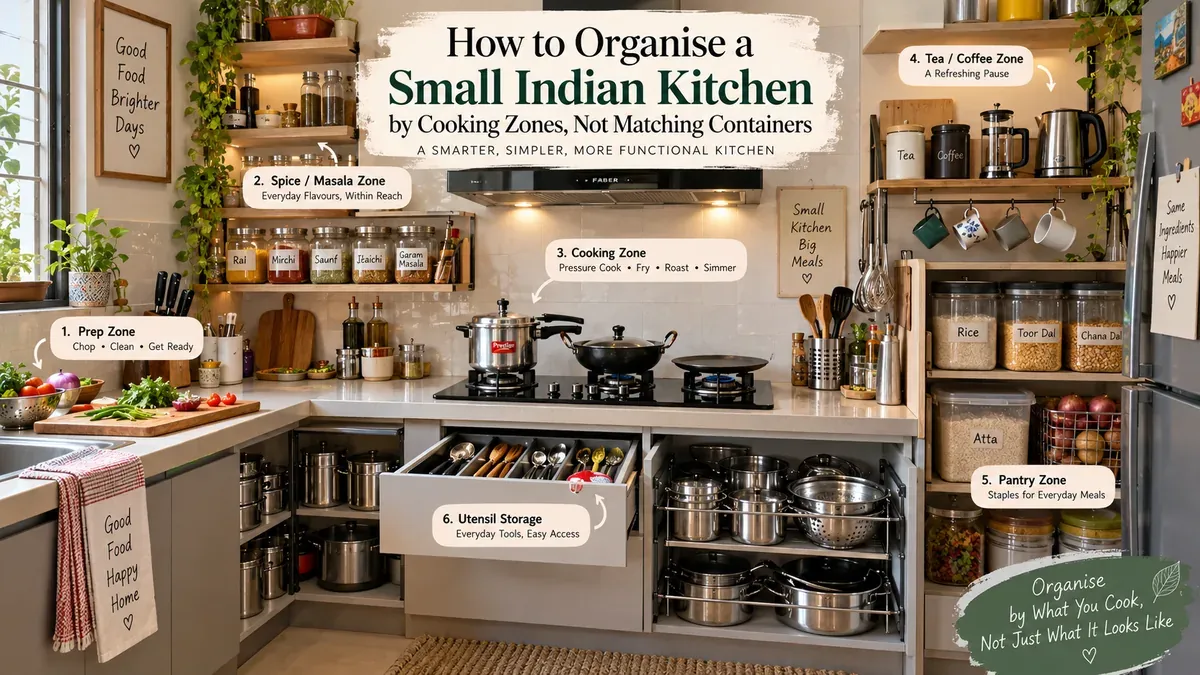
| ffee, poha, or upma | Tea, sugar, cups, small pan, frequently used breakfast ingredients | |
| Cooking and tadka | Preparing sabzi, dal, and tempering | Oil, ghee, salt, daily masalas, spatula, tawa, kadai |
| Pressure cooking | Cooking rice, dal, beans, and potatoes | Pressure cooker, regularly used dals, measuring cup, separators |
| Food preparation | Cutting vegetables, mixing, packing lunch | Chopping board, knives, bowls, peeler, tiffin boxes and lids |
| Cleaning and storage | Washing, drying, waste sorting, refilling | Cleaning cloths, waste bins, spare containers, refill supplies |
2. Follow the 30-Day Usage Rule
Before rearranging your cupboards, spend some time noticing what you actually use. For the next 30 days, pay attention to the utensils, appliances, and ingredients you reach for most often. You don't need a complicated tracking system. Just divide items into three groups.Everyday Items
These are things you use almost daily. Examples include:- Pressure cooker
- Tawa and kadai
- Tea-making utensils
- Salt and everyday masalas
- Cooking oil and ghee
- Chopping board and kitchen knife
Weekly Items
These might include a mixer attachment, large serving bowls, or special cooking vessels. They should still be accessible, but they don't need to occupy your most convenient shelves.Rarely Used Items
Think about cake tins, festival serving dishes, oversized pots, or utensils used only for special occasions. These can usually go into less accessible storage areas. A pressure cooker used five days a week shouldn't have to compete for space with a baking tin used twice a year. This simple change can make a kitchen feel much more manageable without buying additional cupboards.3. Do a No-Buy Kitchen Storage Audit
Before purchasing organizers, empty one troublesome cupboard and examine what you've been keeping inside. You might discover three half-used packets of the same dal, containers without lids, expired ingredients, or utensils that belong somewhere else. Start by sorting everything into groups. Keep the things you genuinely use in that area. Move unrelated items to their proper places. Check whether your existing containers can be stacked safely. If they already work well, there's no reason to replace them simply because they don't match.Look at the Actual Problem
A deep cupboard doesn't automatically need more baskets. Sometimes bringing frequently used items to the front solves the inconvenience. Similarly, if packets are piling up, the real problem might be duplicate grocery purchases rather than insufficient storage. Adding more containers could simply hide those extra packets. Try organizing what you already own before spending money on new storage products.4. Measure Before Buying Kitchen Organizers
Sometimes an additional rack or basket genuinely helps. But buying one without measuring can create another problem. A rack may look perfect online and still fail to fit inside your cupboard because of hinges, pipes, or shelf spacing. Check these measurements first.| What to measure | Why it matters |
|---|---|
| Internal cupboard width | Hinges and cabinet frames may reduce usable space |
| Usable depth | Deep baskets can interfere with doors, pipes, or the back wall |
| Shelf height | Stacked containers still need enough clearance to be removed |
| Largest stored item | The organizer must accommodate your actual cooker, jar, or tiffin |
5. Organize Masalas According to Your Cooking Routine
Indian cooking involves several spices, but not every spice needs to sit on the countertop. Think about the masalas you use almost every day. These might include turmeric, red chili powder, cumin seeds, mustard seeds, coriander powder, and garam masala. Keep your everyday selection together in a convenient location near the cooking area, but safely away from direct heat and steam. Less frequently used whole spices can stay in a separate cupboard or storage box.Keep the Masala Area Simple
There's no need to transfer every spice into an identical glass jar. If the original packets are suitable for storage, you can keep them properly sealed inside a clean, dry container. The goal is to make cooking convenient while keeping spices protected. Avoid placing open spice packets beside the sink or directly above the stove. Heat and moisture can affect their quality over time.6. Arrange Dal, Rice, and Atta So Older Stock Gets Used First
It's easy to forget what's already in your cupboard when new groceries are placed in front of everything else. You buy another packet of chana dal, only to discover two unopened packets at the back. A simple first-in, first-out routine can help reduce this problem. When new groceries arrive, check the existing packets before putting everything away. Bring older suitable stock forward so it gets used first, while also checking best-before dates and package condition.Keep a Small 'Use Next' Section
Set aside a small shelf or basket for items that should be used soon. This might include:- Half-used packets of dal
- Opened dry ingredients
- Ingredients approaching their best-before dates
- Duplicate packets you want to finish
7. Give Tiffin Boxes and Their Lids a Proper Place
Lunch boxes can make even an organized cupboard look messy. The containers stack neatly, but the lids somehow end up in three different places. The easiest solution is to give them a consistent storage system. If you have enough room, keep each tiffin box with its matching lid. If space is limited, stack compatible containers and store their lids vertically in one narrow basket. This makes it easier to see the available lids without searching through a pile. Before discarding an unmatched lid, check whether its container is being used elsewhere. However, there's little benefit in keeping broken or genuinely unmatched lids indefinitely. A quick check every few months can prevent this area from becoming cluttered again.8. Store Pressure Cookers and Kadais Where You Can Reach Them
Nesting pots and pans can save cupboard space, but it doesn't always make everyday cooking easier. Imagine lifting four heavy vessels every morning just to reach your pressure cooker. Technically, everything fits. Practically, the arrangement is inconvenient. Keep your most frequently used cooker or kadai in an accessible position. If you stack vessels, arrange them so you can remove the one you need without shifting several heavy items. Make sure handles and lids aren't under unnecessary pressure. Pressure cooker gaskets, valves, and other removable parts should be stored and maintained according to the manufacturer's instructions. A little extra attention here makes daily cooking more convenient and helps protect important equipment.9. Try a 15-Minute Kitchen Reset After Grocery Shopping
Even a neatly arranged kitchen can become cluttered after a large grocery delivery. New packets get pushed into cupboards, older ingredients disappear behind them, and empty packaging takes up useful space. A short reset after shopping can prevent that buildup. Here's a simple routine:- Put perishables away first. Refrigerate or freeze items that require temperature-controlled storage promptly.
- Move older dry goods forward. Check existing stock and place suitable older packets where they're easy to use.
- Group similar ingredients. Keep dals, rice, flour, and breakfast supplies in their designated areas.
- Remove unnecessary outer packaging. Flatten or recycle packaging where practical while retaining necessary labels and storage information.
- Update your 'use soon' list. If you've purchased something you already have, make a note to finish the existing stock.
10. Check Whether Your New Kitchen Arrangement Actually Works
A tidy kitchen on the first day doesn't necessarily mean the arrangement will remain convenient. The real test comes during an ordinary busy morning. Can you reach the pressure cooker without moving several other vessels? Can you find a tiffin lid quickly? Are your daily spices in the right place? If the answers are yes, your changes are probably helping.Take Before-and-After Photos
If you want to compare the new arrangement with the old one, take photographs from the same positions. Capture these four areas:- The main kitchen counter
- The masala storage area
- The primary dry-goods cupboard
- The tiffin and utensil storage section
Common Kitchen Organization Mistakes to Avoid
A few mistakes can make a small kitchen harder to use, even after a complete makeover.Buying Containers Before Sorting
If you buy storage products before reviewing what you own, you may end up organizing things you don't actually need. Sort first, then decide whether additional storage is necessary.Keeping Everything on the Countertop
It's tempting to keep frequently used items in plain sight. But when every utensil, jar, and packet stays on the counter, there may be very little room left for chopping or preparing food. Keep only the essentials within reach.Storing Heavy Vessels Too High
Large pressure cookers and heavy kadais can be difficult to lift down safely. Choose lower, accessible shelves for heavier equipment.Ignoring Daily Cooking Habits
A kitchen arrangement that works for one household might be inconvenient for another. Someone who prepares tiffins every morning needs a different setup from someone who cooks mainly in the evening. Organize according to your routine rather than copying a layout simply because it looks attractive.Forgetting About Grocery Rotation
Even a perfectly arranged cupboard becomes difficult to manage if new packets continually bury older ones. Make checking existing stock part of your regular shopping routine.Do You Really Need More Kitchen Storage?
Sometimes the answer is yes. A kitchen with limited cupboards may benefit from an additional shelf, drawer divider, or carefully measured organizer. But it's worth checking whether the existing space is being used effectively first. Ask yourself:- Am I keeping things I rarely use in my most convenient cupboards?
- Do I have duplicate utensils or grocery packets?
- Can I reach everyday cooking equipment easily?
- Are containers taking up more room than their contents require?
- Would rearranging shelves solve the problem without buying anything?
Final Thoughts
Organizing a small Indian kitchen doesn't have to involve expensive modular fittings or rows of matching jars. Often, the most useful changes are simple. Keep chai supplies together, place everyday masalas where they're convenient and safe, give tiffin lids a proper place, and make sure your pressure cooker is easy to reach. Use older grocery stock thoughtfully and take a few minutes to reset the cupboards after shopping. Most importantly, organize your kitchen around how you cook. A kitchen that works well during a busy weekday morning is far more valuable than one that only looks perfect when nobody is using it.Related Articles
- Budget-Friendly Desi Home Decor Using Local Finds
- Work-from-Home Setup Ideas for Small Indian Flats
- Practical Low-Waste Swaps for Everyday Households
Useful Reference
FSSAI – Eat Right resources for food safety, storage, and healthy household practices.— END OF STORY —
Have a factual correction or suggestion? Get in touch.