Have you ever craved that rich, buttery, smoky dal makhani from your favourite dhaba — only to remember you forgot to soak the lentils the night before? You are not alone. Most traditional recipes insist on an 8-hour soak, which makes this dish feel like a two-day project. But here is the good news: you can make a deeply flavourful, restaurant-quality dal makhani in under two hours using a pressure cooker — no overnight soaking required.
This method is scaled for a family-size batch and uses familiar Indian pantry ingredients.
What Makes Dal Makhani So Special?
Dal makhani is not just another lentil dish. It is the crown jewel of Punjabi cooking. The name itself tells the story — makhani means “buttery,” and this dish earns that name with its slow-cooked black lentils (urad dal), kidney beans (rajma), tomatoes, and a generous hand with butter and cream.
What separates a great dal makhani from an average one is time and heat management. Dhabas and restaurants simmer it for hours, sometimes overnight, on a low flame. We are going to recreate that depth of flavour using a pressure cooker and a slow finish on the stove.
Ingredients
Serves 4 | Prep time: 15 minutes | Cook time: 1 hour 30 minutes
For the dal:
- 1 cup whole urad dal (black lentils)
- ¼ cup rajma (kidney beans)
- 4 cups water (for pressure cooking)
- 1 tsp salt
- ½ tsp turmeric powder
For the masala:
- 3 tbsp butter (or ghee)
- 1 tbsp oil
- 1 large onion, finely chopped
- 4 garlic cloves, minced
- 1-inch piece of ginger, grated
- 2 medium tomatoes, pureed
- 1 tsp cumin seeds
- 1 tsp red chilli powder (adjust to taste)
- 1½ tsp coriander powder
- ½ tsp garam masala
- Salt to taste
For finishing:
- 3 tbsp fresh cream (or malai)
- 1 tbsp butter
- Fresh coriander leaves for garnish
- A small piece of coal for dhungar (optional, for smoky flavour)
Step-by-Step Method
Step 1: Quick-Soak the Lentils (30 Minutes Instead of 8 Hours)
Rinse the urad dal and rajma thoroughly under cold water. Place them in a large bowl and pour boiling hot water over them — enough to submerge completely with 2 inches of water above. Cover the bowl and let them soak for 30 minutes.
This hot-water soak softens the lentils enough for pressure cooking without compromising texture or taste. It is the single biggest time-saving trick in this recipe.
Step 2: Pressure Cook Until Completely Soft
Drain the soaked lentils and transfer them to a pressure cooker. Add 4 cups of fresh water, salt, and turmeric. Close the lid and pressure cook on high heat for 6–7 whistles, then reduce to low heat and cook for another 15 minutes.
Let the pressure release naturally — do not rush this step. Open the lid and check the lentils. They should be completely soft, almost mushy. If not, add half a cup of water and cook for 2 more whistles. The urad dal should break apart easily when pressed between your fingers.
Tip: Do not drain the cooking water. That starchy liquid is liquid gold and gives dal makhani its thick, velvety texture.
Step 3: Make the Masala Base
In a heavy-bottomed kadai or deep pan, heat butter and oil together over medium flame. The oil prevents the butter from burning.
Add cumin seeds and let them splutter for 30 seconds. Add the finely chopped onions and cook on medium heat, stirring occasionally, for 12–15 minutes until they turn deep golden brown. Do not rush this step — the caramelised onions are the flavour foundation of the entire dish.
Add the minced garlic and grated ginger. Stir and cook for 2 minutes until the raw smell disappears.
Step 4: Add Tomatoes and Spices
Add the pureed tomatoes and stir everything together. Cook on medium heat for 8–10 minutes, stirring frequently, until the oil starts to separate from the masala and the mixture turns deep red. This is called the bhunao stage and it is non-negotiable for authentic flavour.
Add red chilli powder, coriander powder, and garam masala. Mix well and cook for another 2 minutes.
Step 5: Combine and Slow-Cook
Add the pressure-cooked dal (along with all its cooking liquid) to the masala. Stir everything together. The mixture will look thin — that is perfectly fine.
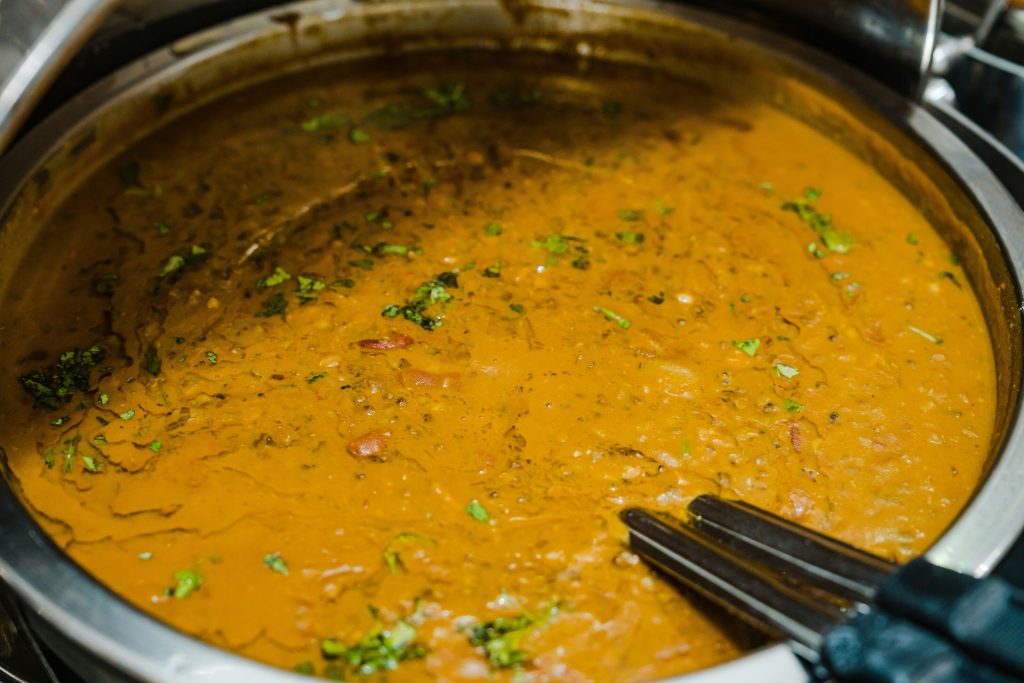
Bring to a boil, then reduce heat to the lowest setting. Cook uncovered for 30–40 minutes, stirring every 5–7 minutes to prevent sticking. As the dal simmers, it will thicken and the colour will deepen to a rich dark brown. This slow finish is what makes it taste like it has been cooking all day.
Add water if it gets too thick — the final consistency should coat the back of a spoon but still be pourable.
Step 6: Finish with Butter and Cream
Turn off the heat. Stir in fresh cream and a tablespoon of butter. Mix gently. The cream adds richness while the final knob of butter gives that glossy, restaurant-style finish.
Taste and adjust salt.
Step 7: Optional Dhungar (Smoky Finish)
For that signature dhaba smokiness: heat a small piece of charcoal directly on a gas flame until it glows red. Place a small steel bowl in the centre of the dal, carefully put the hot coal inside it, drizzle half a teaspoon of ghee over the coal (it will smoke immediately), and immediately cover the pan with a tight lid. Let it rest for 3–4 minutes. Remove the coal bowl and stir the dal. The smoky aroma will blow your mind.
Serving Suggestions
Dal makhani is best served with:
- Butter naan — the classic pairing
- Jeera rice — for a lighter option
- Tandoori roti — for a more rustic, wholesome meal
- A dollop of white butter (makhan) on top just before serving
Garnish with fresh coriander and a swirl of cream for that restaurant presentation.
Tips for the Best Dal Makhani
Use whole urad dal, not split. The whole black lentil holds its shape better and gives the dal its characteristic earthy depth. Split urad dal makes a completely different dish.
Do not skip the slow simmer. The 30–40 minute finish on low heat is what transforms a good dal into a great one. Rushing this step is the most common mistake home cooks make.
Use real butter, not margarine. This is not the time to count calories. The flavour difference is enormous.
Make it the night before. Dal makhani, like most Indian lentil dishes, tastes significantly better the next day as the spices meld together. Reheat on low flame with a splash of water.
Control the cream. The recipe calls for 3 tablespoons, but you can go up to 5 if you want a richer, creamier result. For a lighter version, use low-fat milk instead.
Frequently Asked Questions
Can I make this in an Instant Pot? Yes. Pressure cook on high for 30 minutes with a natural release. The rest of the recipe remains the same.
Why is my dal not getting dark in colour? The deep brown colour comes from long cooking and caramelised onions. Make sure your onions are properly golden before adding tomatoes, and give the final simmer enough time.
Can I make it vegan? Absolutely. Replace butter with vegan butter or coconut oil, and swap cream for coconut cream or cashew cream. The flavour profile changes slightly but it is still delicious.
How long does it keep? Refrigerated in an airtight container, dal makhani keeps well for 4–5 days. It also freezes beautifully for up to a month.
Can I use canned kidney beans? Yes, but add them only in the last 15 minutes of simmering since canned beans are already cooked. Do not pressure cook them or they will turn to mush.
Final Thoughts
The secret to great dal makhani is not a rare ingredient or a complicated technique — it is patience and heat management. The quick-soak method eliminates the biggest barrier (planning ahead), the pressure cooker handles the heavy lifting, and a slow 40-minute simmer does the rest. Once you make this at home, you will never need to order it from a restaurant again.
If you make this dal, note any changes you make to soaking time, cooker type or finishing fat so you can reproduce the texture you prefer next time.
Recipe guide by Smart Desi Life. Cooking time and texture can vary with lentils, cooker type and heat.
Related reading on Smart Desi Life
Continue with these closely related guides:
- Biryani vs Pulao — The Real Difference Finally Explained
- The Real Science Behind a Perfect Aloo ki Sabji
Useful references
For additional background, official information or specialist guidance, these resources may be useful:
External resources are provided for reader reference. Guidance, prices, opening hours and other time-sensitive information can change, so check the linked source directly when making a decision.