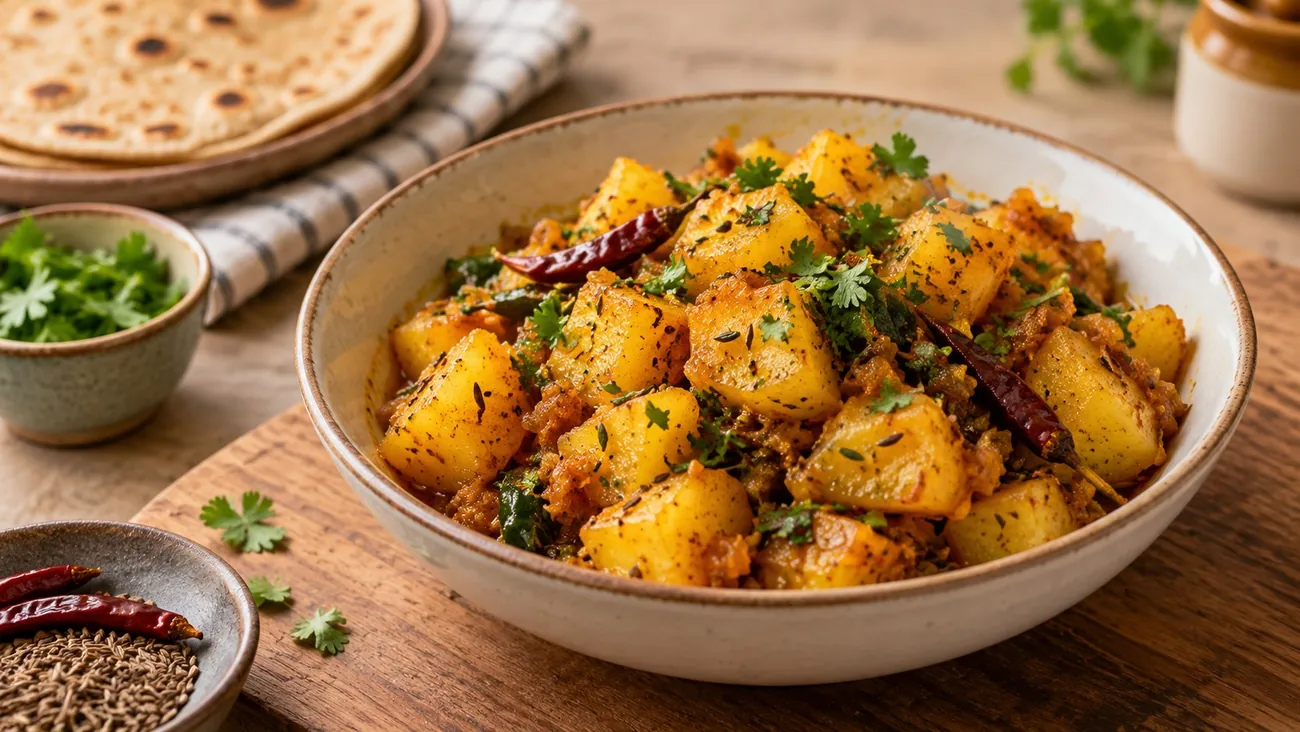
Aloo ki sabji is one of those dishes that almost everyone grows up eating. It's simple, affordable, and made with ingredients usually available in an Indian kitchen.
Yet even a basic potato sabji can go wrong. Sometimes the potatoes become too soft and start breaking apart. Sometimes the jeera burns before the other spices go into the pan. And occasionally, the curry you planned to serve with hot pooris turns out so thick that there's hardly any gravy left.
The trick is to decide what kind of aloo sabji you want to make before you begin cooking.
For a lunchbox or a simple dal-rice meal, dry aloo sabji works beautifully. The potatoes should hold their shape, with lightly browned edges and a coating of spices.
For poori, a softer potato curry with a mildly spiced gravy is usually more suitable. A few mashed potato pieces help thicken the gravy naturally.
Here are two easy ways to prepare aloo ki sabji at home.
Two Types of Aloo Ki Sabji
Although both recipes use potatoes and everyday Indian spices, their cooking methods are slightly different.
| Feature |
Dry Aloo Sabji |
Poori Wali Aloo Curry |
| Texture |
Firm potato pieces with lightly browned edges |
Soft potato chunks in gravy |
| Water |
Very little or none after boiling |
About 1–1½ cups initially |
| Cooking style |
Pan-fried with spices |
Simmered in a spiced gravy |
| Best served with |
Roti, paratha, dal-rice |
Poori, kachori, or roti |
| Ideal for |
Everyday meals and lunchboxes |
Breakfast, brunch, or family meals |
Neither version requires complicated ingredients. The main difference is how you cook and finish the potatoes.
Recipe 1: Dry Aloo Ki Sabji
Dry aloo sabji is a good choice when you want something quick to serve with roti or pack for lunch.
The potatoes are cooked first and then tossed with cumin, turmeric, coriander powder, and a few other spices.
The finished dish should be lightly coated with masala rather than surrounded by gravy.
Recipe Information
| Details |
Information |
| Preparation and cooking time |
Approximately 30 minutes |
| Servings |
3–4 as a side dish |
| Cuisine |
Indian |
| Diet |
Vegetarian, vegan |
| Cooking method |
Boiling and shallow frying |
Ingredients for Dry Aloo Sabji
- 4 medium potatoes (approximately 500 g)
- 2 tablespoons oil
- 1 teaspoon cumin seeds (jeera)
- A pinch of hing (optional)
- ¼ teaspoon turmeric powder
- ½ teaspoon red chilli powder, or according to taste
- 1 teaspoon coriander powder
- ½ teaspoon amchur (dry mango powder)
- 1 green chilli, chopped (optional)
- Salt to taste
- Fresh coriander leaves for garnishing
- A little lemon juice if not using amchur
How to Make Dry Aloo Sabji
Step 1: Cook the Potatoes
Wash the potatoes thoroughly and place them in a saucepan with enough water to cover them.
Cook until a knife can enter the potatoes but the centers still offer a little resistance.
You don't want them completely falling apart.
This is particularly important for dry sabji because the potato pieces will cook a little more in the frying pan.
Drain the water and allow the potatoes to cool until they're comfortable to handle.
Peel them if you prefer, then cut them into medium-sized pieces.
Try to keep the pieces roughly similar in size so they cook evenly.
Step 2: Prepare the Jeera Tadka
Place a wide frying pan or kadai over medium heat.
Add 2 tablespoons of oil.
Once the oil is warm, add the cumin seeds.
Let them sizzle briefly until aromatic.
Add hing and chopped green chilli if you're using them.
Don't leave the cumin unattended while searching for the other spices. It can burn quickly in hot oil.
Keeping the spices measured and ready makes this step much easier.
Step 3: Add Potatoes and Spices
Add the cooked potato pieces to the pan.
Sprinkle in turmeric powder, red chilli powder, coriander powder, and salt.
Gently turn the potatoes until they're evenly coated with the spices.
Avoid stirring aggressively because the cooked potatoes can break apart.
If the ground spices begin sticking to the pan, lower the heat and add a tiny splash of water.
Step 4: Cook Until Lightly Golden
Allow the potatoes to cook over medium heat for approximately 6–8 minutes.
Turn them occasionally rather than constantly stirring.
This gives the potato pieces time to develop lightly browned edges where they touch the pan.
The goal isn't to make them crispy like French fries. You simply want a little colour and a well-cooked masala coating.
Step 5: Finish and Serve
Once the potatoes are cooked and lightly golden, add the amchur powder.
Mix gently.
Switch off the heat and finish with chopped coriander leaves.
If you're using lemon juice instead of amchur, add it after removing the pan from the heat.
Taste and adjust the salt if needed.
Your dry aloo ki sabji is ready to serve with roti, paratha, or a simple dal-rice meal.
Recipe 2: Poori Wali Aloo Ki Sabji
Poori wali aloo sabji is a little different from the dry version.
Here, you want soft potato pieces surrounded by enough gravy to scoop up with a hot poori.
The gravy doesn't need cream or flour for thickness. Mashing a few pieces of cooked potato releases enough starch to give it body.
This version can be made with or without tomatoes, depending on the flavour your family prefers.
Ingredients for Poori Wali Aloo Curry
- 4 medium boiled potatoes (approximately 500 g)
- 1½ teaspoons oil or ghee
- 1 teaspoon cumin seeds
- A pinch of hing (optional)
- 1 teaspoon freshly grated ginger
- 1 green chilli, chopped
- ¼ teaspoon turmeric powder
- 1 teaspoon coriander powder
- 1 small tomato, chopped (optional)
- 1–1½ cups water, plus more if needed
- 1 teaspoon garam masala, or adjust to taste
- Salt to taste
- Fresh coriander leaves for garnishing
How to Make Poori Wali Aloo Sabji
Step 1: Prepare the Potatoes
Boil the potatoes until tender.
Allow them to cool slightly, then peel and break them into uneven, medium-sized pieces using your hands or a spoon.
You don't need perfectly shaped cubes for this recipe.
In fact, a few smaller pieces are useful because they soften into the gravy while cooking.
Step 2: Make the Tempering
Heat the oil or ghee in a kadai over medium heat.
Add the cumin seeds and let them sizzle.
Add hing, grated ginger, and green chilli.
Stir briefly until the ginger becomes fragrant.
Take care not to burn the spices.
Step 3: Cook the Tomato and Masala
If you're using tomato, add it now.
Cook until it softens and loses its raw taste.
Add turmeric powder and coriander powder.
Stir with a small splash of water to prevent the ground spices from burning at the bottom of the pan.
If you prefer a simpler ginger-cumin gravy, skip the tomato entirely.
Both versions work well with poori.
Step 4: Add Potatoes and Water
Add the broken boiled potatoes to the masala.
Sprinkle in salt and mix gently.
Pour in approximately 1 cup of water and bring the mixture to a gentle simmer.
Using a spoon, press two or three potato pieces against the side of the pan.
The mashed potato will blend into the liquid and help thicken the gravy naturally.
Step 5: Simmer the Curry
Let the curry simmer for about 8–10 minutes.
Stir occasionally to prevent sticking.
If the gravy becomes too thick, add a little more hot water.
For poori, the curry should be loose enough to scoop easily but not so watery that it runs off the plate.
Remember that potato gravy thickens as it cools.
Step 6: Add Garam Masala and Coriander
Once the consistency is right, sprinkle in the garam masala.
Stir gently and taste the curry.
Adjust the salt if needed.
Finish with fresh coriander leaves and switch off the heat.
Serve the aloo curry hot with freshly prepared pooris.
How to Choose Potatoes for Aloo Ki Sabji
In many local vegetable markets, potatoes are sold simply as aloo without much information about the variety.
That's usually not a problem.
You can still prepare a good sabji by paying attention to how the potatoes behave during cooking.
For Dry Aloo Sabji
Choose potatoes that hold their shape after boiling.
If the edges start splitting or crumbling quickly, handle them carefully.
Allowing cooked potatoes to cool before cutting can help them stay intact.
For Aloo Curry
Softer potatoes work well because some pieces are meant to break down into the gravy.
You don't need neatly cut cubes.
Irregular pieces help create a more homely texture.
You can also use raw potato cubes for curry, but they will require additional cooking time and sufficient water to become completely tender.
Common Aloo Sabji Problems and Easy Fixes
Even a familiar recipe can turn out differently from one day to another.
Here are some common problems and what you can do about them.
1. My Aloo Sabji Has Become Mushy
This usually happens when the potatoes were overcooked before frying or were stirred too frequently.
If the potatoes have already broken apart, it's difficult to restore their original shape.
For the current batch, stop stirring unnecessarily and serve it as a softer sabji.
Next time, cook the potatoes for a shorter period, let them cool, and turn them gently in the pan.
2. The Cumin Tastes Burnt
Cumin seeds can burn when the oil is too hot or when they're left frying for too long.
Burnt cumin may give the sabji a harsh, bitter taste.
Adding extra chilli powder or garam masala doesn't reliably remove that bitterness.
If you've only just burned the cumin, it's better to start the tadka again.
For a finished dish that simply lacks cumin aroma, a small amount of freshly prepared jeera tadka can help. However, it won't undo severe scorching.
3. The Aloo Curry Is Too Thin
If your poori wali aloo sabji has too much liquid, mash a few additional potato pieces into the gravy.
Let the mixture simmer uncovered for several minutes.
As water evaporates and potato starch mixes into the gravy, the curry will thicken.
Taste before adding more salt, because reducing the liquid can make the existing seasoning more concentrated.
4. The Potato Curry Is Too Thick
Potato gravy thickens naturally as it sits.
If it has become too thick, add a little hot water and mix gently.
Allow it to heat through before serving.
This is particularly useful when you've prepared the curry earlier and are reheating it with pooris.
5. The Sabji Tastes Bland
Adding more chilli isn't always the answer.
Spiciness and flavour are not the same thing.
Check the salt first.
For dry aloo sabji, a little amchur or lemon juice can make the flavours brighter.
Fresh coriander also adds freshness.
If your tomato-based curry tastes slightly raw, it may simply need a little more simmering.
6. The Masala Sticks to the Pan
This can happen when ground spices are added to very hot oil without enough moisture.
Keep the heat moderate and use a small splash of water when necessary.
Stir gently so the spices coat the potatoes rather than burning at the bottom.
Dry Aloo Sabji vs Aloo Curry: Which Is Better for a Lunchbox?
For a regular office or school lunchbox, dry aloo sabji is usually more convenient.
It doesn't contain much gravy, making it easier to pack and eat with roti.
Let the food stop steaming before closing the container, but don't leave cooked potatoes sitting at room temperature for extended periods. Use appropriate refrigeration or temperature-controlled storage if the meal won't be eaten soon.
Poori wali aloo curry is better suited to a meal served shortly after cooking.
It can also be packed in a suitable leakproof container, but remember that the gravy may thicken during storage.
A little hot water can help restore its consistency when reheating.
What to Serve With Aloo Ki Sabji
Both versions pair well with familiar Indian dishes.
| Accompaniment |
Best choice |
| Plain roti or chapati |
Dry aloo sabji |
| Paratha |
Dry aloo sabji |
| Poori |
Aloo curry with gravy |
| Dal and steamed rice |
Dry aloo sabji as a side |
| Kachori |
Aloo curry |
| Simple homemade thali |
Either version |
Dry aloo sabji also works well alongside dal, rice, pickle, and curd.
For poori wali aloo curry, a simple bowl of curd or some pickle can complete the meal.
Frequently Asked Questions
Can I make aloo sabji without onion and garlic?
Yes. Both recipes can be made without onion and garlic.
Cumin, ginger, turmeric, coriander powder, and other everyday spices can provide plenty of flavour.
Should I boil potatoes before making dry aloo sabji?
Boiling them until just tender makes the process quicker.
The potatoes then need only a few minutes in the pan to absorb the spices and develop lightly browned edges.
How do I stop potatoes from breaking while frying?
Avoid overcooking them during boiling.
Allow them to cool slightly before cutting, and turn them gently rather than stirring continuously.
Can I make poori wali aloo sabji without tomatoes?
Yes. Tomatoes are optional.
A simple ginger, cumin, turmeric, and coriander-based gravy tastes good with poori.
How do I thicken aloo curry without flour?
Mash a few cooked potato pieces into the gravy and allow it to simmer.
The starch from the potatoes naturally thickens the liquid.
Can I make aloo sabji in advance?
Yes. Both dishes can be prepared ahead of time and refrigerated promptly.
Reheat thoroughly before serving. Add a little water to the gravy version if it has become too thick.
Final Thoughts
Aloo ki sabji doesn't need a long ingredient list or a complicated cooking method.
The most important thing is understanding the texture you want.
For dry aloo sabji, cook the potatoes until just tender, let them cool slightly, and toss them gently with the spices. Give them enough time in the pan to develop a little colour without breaking apart.
For poori wali aloo curry, allow the potatoes to soften into the gravy and mash a few pieces to create the right consistency.
Keep the cumin from burning, adjust the seasoning carefully, and don't rush the final texture.
With these small changes, the same everyday vegetable can become two satisfying dishes—one perfect for a weekday lunchbox and the other ideal for a plate of hot pooris.
Related Recipe
For another comforting Indian dish where cooking time and finishing technique make a noticeable difference, read our Dal Makhani guide.
— END OF STORY —Have a factual correction or suggestion? Get in touch.