Kaju Katli Recipe: How to Make Perfect Kaju Barfi at Home.
Learn how to make perfect Kaju Katli at home with this easy step-by-step recipe. Discover ingredients, expert tips, and secrets to soft, smooth Kaju Barfi.
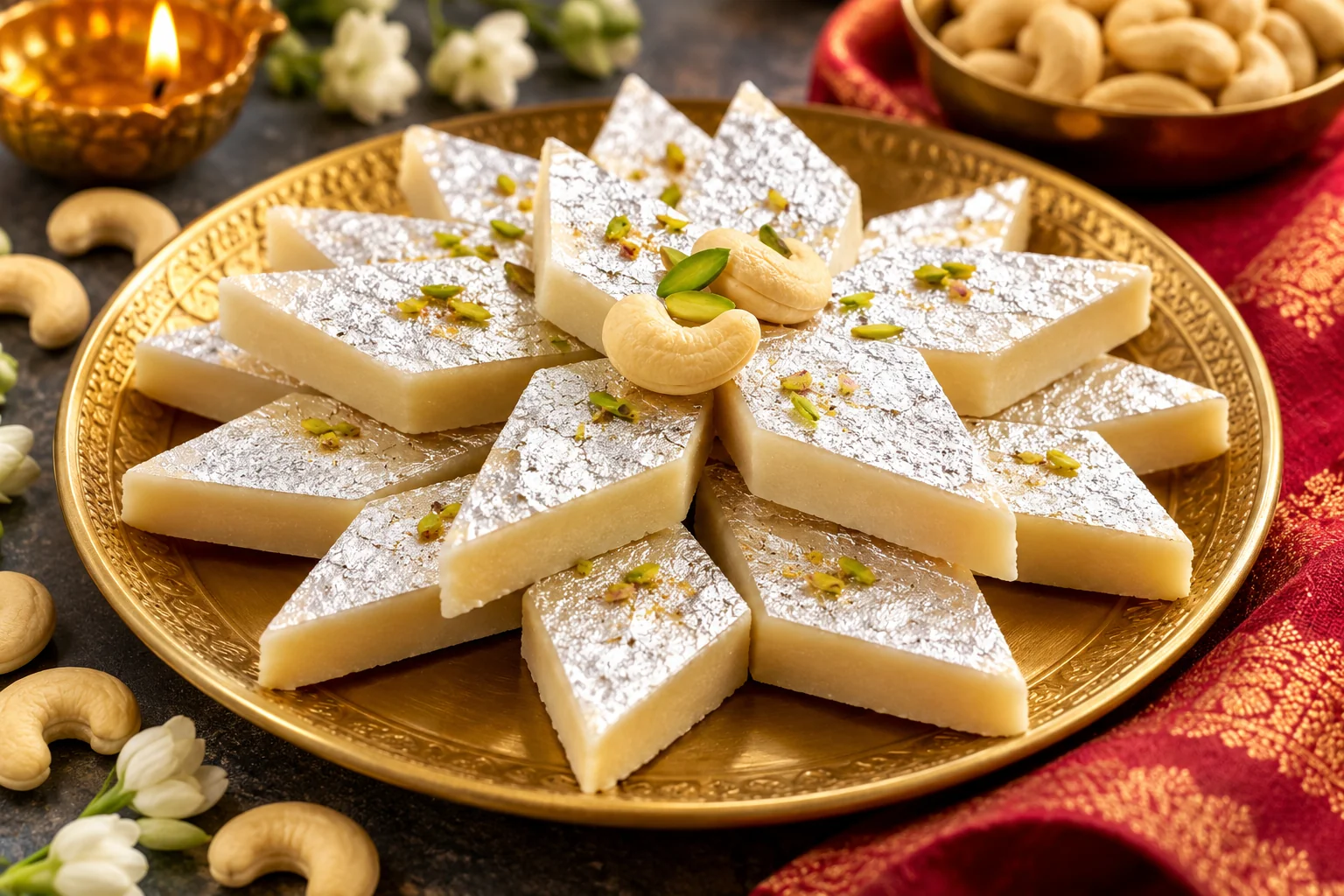
Kaju Katli is one of India's most famous traditional sweets, known for its delicate texture, rich cashew flavor, and stunning diamond form. Whether you're celebrating Diwali, making sweets for a family event, or just seeking something tasty, handmade Kaju Katli is an excellent option.
This famous Indian mithai, also known as Kaju Barfi, is largely produced with cashews, sugar, and water. Despite its exquisite look, it does not need a lengthy list of ingredients or specialized equipment.
The actual trick to producing great Kaju Katli is getting the texture perfect. The cashews must be properly crushed, the mixture gently cooked, and the dough rolled while still warm.
You can easily make smooth, silky Kaju Katli at home with time and attention to detail.
What is Kaju Katli?
Kaju Katli is a classic Indian treat made with finely powdered cashews and sugar. Kaju signifies cashew, whereas katli refers to thin slices.
Unlike certain barfis, which are thick and dense, Kaju Katli is often rolled into a thin sheet and cut into little diamonds.
Its smooth texture, gentle sweetness, and naturally nutty flavor make it a popular choice at festivals and special events.
Kaju Katli is often served at weddings, presented as a Diwali gift, or made available to visitors at family gatherings.
Some sweet shops adorn it with edible silver leaf, called as varak, although this is completely optional.
Kaju Katli Recipe: Overview
- Prep time: 5 minutes
- Cook time: 15 minutes
- Total time: About 20 minutes, including cooling.
- Serving Size: Approximately 14 pieces
- Indian Cuisine
- Course: Dessert
- Diet: vegetarian and gluten-free.
Ingredients for Homemade Kaju Katli.
This dish is easy to make with only a few ingredients.
Main Ingredients:
- 1 cup (about 160 g) ordinary, unsalted cashews.
- ½ cup (100 g) granulated sugar
- Five tablespoons of water.
- Optional: 1 tablespoon ghee (#).
Optional Flavors
- 1/4 teaspoon cardamom powder.
- Several strands of saffron.
- One teaspoon of rosewater
- Decorate with food-grade edible silver leaf
Choose fresh, low-moisture cashews. Raw, unsalted cashews are perfect for their mild flavor and smooth texture.
For a dairy-free option, substitute ghee with coconut oil or leave it altogether completely.
How to Prepare Kaju Katli at Home
To make Kaju Katli, follow these steps: prepare cashew powder, heat sugar mixture, create dough, and cut into sweets.
Step 1: Prepare Cashew Powder
Begin by putting the cashews into a totally dry blender or mixer grinder.
Grind them in quick bursts to a fine powder. Avoid running the blender continually since the heat and friction might cause the cashews' natural oils to be released.
If you puree the cashews for too long, they may become a thick paste rather than a powder. This may make it harder to obtain the typical Kaju Katli texture.
Once the cashews have been pulverized, look for big chunks. If required, run the powder through a medium-fine sieve.
Set the prepared cashew powder aside.
Useful tip: Use cashews at room temperature. Cold cashews may cause condensation, making the powder moist and sticky.
Step 2: Prepare the Sugar Mixture
Take a heavy-bottomed pan and combine the sugar and water.
Place the pan over low heat and gently swirl until the sugar has dissolved completely.
Allow the mixture to cook evenly without becoming too thick.
This approach does not need the preparation of a one-string sugar syrup. Once the sugar has dissolved, you may proceed to the following step.
Using a heavy-bottomed pan helps transfer heat evenly, reducing the risk of scorching the mixture.
Step 3: Add the ground cashews.
To the dissolved sugar mixture, gradually add the powdered cashews.
Keep the heat low and constantly swirl to incorporate everything.
Initially, the mixture may look little loose. As it cooks, it will gradually thicken.
Continue swirling to keep the cashews from adhering to the bottom of the pan.
After a few minutes, the mixture should begin to form a soft mass that pulls away from the edges.
This is an essential step since both undercooking and overcooking may have an impact on the final product.
If the mixture is withdrawn too soon, the Kaju Katli may stay sticky. Excessive cooking time might result in dry and hard sweets.
Step 4: Check the Dough Consistency.
To see whether the mixture is ready, take a little quantity with a spoon and let it cool slightly.
Once it's safe to touch, gently roll it between your fingers.
The ingredients should form a smooth, soft ball without adhering too much.
If it still seems too moist, heat for a brief period while stirring.
When the appropriate consistency is obtained, immediately remove the pan from heat.
Step 5: Knead the cashew dough.
Transfer the heated mixture to a lightly oiled dish or a piece of parchment paper.
Allow it to cool just enough to be comfortable. Be cautious, since newly heated sugar might cause burns.
If used, add the ghee and your desired flavoring.
Knead the ingredients until dough is smooth and holds together.
Avoid kneading for too long, since this might cause the cashews to exude oil.
Ensure the dough is soft and malleable, not crumbly or sticky.
Step 6: Roll the Dough.
Put the heated cashew dough between two pieces of parchment paper.
Use a rolling pin to flatten the dough uniformly.
Aim for a thickness of around 3-5mm.
Rolling between parchment sheets prevents sticking and produces a smoother surface without needing more flour or powdered sugar.
Work with the dough while it's still warm, since it will stiffen up as it cools.
Step 7: Cut into diamond shapes
After the rolled dough has cooled and grown hard enough to slice, remove the top parchment layer.
Using a sharp knife, make diagonal cuts across the sheet.
Make another set of diagonal cuts in the other direction to form the usual diamond-shaped pieces.
Carefully lift each piece with a tiny spatula or butter knife.
Your handcrafted Kaju Katli is now ready for service.
For a festive look, add food-grade edible silver leaf before cutting.
Tips for Making Soft and Smooth Kaju Katli.
Small tweaks may significantly enhance the flavor of this simple dessert.
1. Select fresh cashews
Fresh cashews have a light, pleasant scent and a natural creamy flavor.
Avoid using old or rotten nuts as they will alter the overall flavor of the dish.
2: Do not overgrind the cashews
This is one of the most significant suggestions.
Cashews have natural fats that may be liberated with lengthy grinding. When the powder turns oily, creating a smooth and balanced dough becomes more difficult.
Use brief pulses and stop when the powder is fine.
3. Cook over low heat.
High heat might result in uneven cooking and make the sugar mixture too thick before the cashews are fully mixed.
A mild flame provides greater control.
4. Stir continuously.
Constant swirling ensures that the cashew powder is properly combined with the sugar.
It also prevents lumps and lowers the danger of burns.
5. Avoid overcooking.
Cooking the mixture for too long might cause Kaju Katli to harden after cooling.
Instead than depending only on a timer, remove the mixture after it reaches a soft, cohesive consistency.
6: Roll While Warm
Warm dough is more simpler to form.
Allowing it to cool fully before rolling may cause cracks around the edges.
7. Keep the thickness even.
Traditional Kaju Katli is rather thin.
Rolling evenly ensures constant texture and an appealing look.
Common Kaju Katli Issues and Solutions
Why Is My Kaju Katli Hard?
Overcooking the cashew mixture is a common cause of hard Kaju Katli.
When too much moisture evaporates, the sugar concentrates, and the resultant sweet may become stiff.
To save an overdone combination, reheat it to a low heat and add a tiny amount of water. Stir gently until it softens and becomes workable again.
Why is my Kaju Katli sticky?
A sticky texture typically indicates that the mixture has too much moisture or was not cooked thoroughly.
Return to the pan and slowly simmer for another minute or two, stirring constantly.
Check consistency again before removing from heat.
Why Does my Dough Crack?
Cracking may occur when the dough has cooled too much, gets dry, or has been overworked.
Try kneading it lightly while it's still warm. If the area is very dry, adding a few drops of water will help restore elasticity.
Why Does My Kaju Katli Look Oily?
When cashews are pounded or kneaded excessively, they may take on an oily look.
The natural cashew oil separates, making the mixture glossy and sometimes oily.
To prevent this, avoid over-blending and only touch the dough as needed.
Delicious Kaju Katli Variations
Once you grasp the fundamental approach, you may experiment with other flavors.
Cardamom, Kaju Katli
Incorporate a little quantity of freshly ground cardamom into the prepared mixture.
Cardamom mixes well with cashews, providing a toasty and aromatic flavor.
Kesar Kaju Katali
Add a few saffron strands to the sweet for a delicate scent and golden color.
Rose Flavored Kaju Katli
For a mild floral flavor, add a little amount of food-grade rose water.
Rose blends well with the rich flavor of cashews, making this treat ideal for festive events.
Vegan Kalju Katli
Traditional Kaju Katli may be readily made without dairy.
To avoid ghee, use a tiny quantity of neutral-flavored coconut oil.
How to Store Homemade Kaju Katli.
Proper storing helps to preserve the texture and flavor of prepared desserts.
Allow the Kaju Katli to cool fully before storing the pieces in an airtight container.
Separate the layers with parchment paper to keep them from sticking together.
For the finest quality, keep milk-free Kaju Katli in the refrigerator and eat it within a week. Storage times might vary based on preparation, moisture, and cleanliness.
If your version includes fresh milk, cream, or other perishable ingredients, keep it refrigerated and consume it shortly.
Bring cold portions closer to room temperature before serving for a smoother texture.
Discard any sweets with a strange odor, visible mold, or symptoms of deterioration.
When to serve Kaju Katli.
Kaju Katli is a flexible traditional treat that is ideal for a variety of occasions.
It is particularly popular during Diwali, when families present elegantly packaged boxes of mithai.
You may also serve it at weddings, birthday celebrations, family gatherings, and holiday feasts.
For gifting, carefully put the diamond-shaped pieces in a food-safe ornamental box.
Pair Kaju Katli with other Indian sweets like Besan Ladoo, Gulab Jamun, or Coconut Barfi to make a classic mixed sweet box.
Frequently Asked Questions about Kaju Katli.
Can You Make Kaju Katli Without Ghee?
Yes, ghee is optional. You can make Kaju Katli with only cashews, sugar, and water. Adding a tiny bit of ghee makes the dough more manageable.
Can I use roasted cashews?
Raw, unsalted cashews are often chosen because they have a more classic flavor and a lighter look. Roasted cashews may alter their flavor and texture.
Is Kaju Katli Gluten-free?
Kaju Katli, prepared with simple cashews, sugar, and water, is naturally gluten-free. When cooking for someone with celiac disease, verify ingredient labels and prevent cross-contamination.
Can I make Kaju Katli without milk?
Absolutely. Milk is not required for this simple recipe. The cashew combination may be made with water and sugar.
How Can I Get Smooth Kaju Katli?
Use finely ground cashews, simmer the mixture over low heat, and knead the dough gently while warm. Rolling between parchment sheets helps achieve a smooth finish.
Why Is Kaju Katli Cut into Diamonds?
Diamond-shaped pieces are a typical presentation method for sweets, making them simple to portion and visually appealing. You may cut homemade Kaju Katli into squares or other forms as desired.
Is Kaju Katli suitable for vegans?
Kaju Katli may be made vegan by omitting ghee, butter, milk, and other animal-derived components. When using edible silver leaf decorations, choose vegan-friendly options.
Final Thoughts.
Homemade Kaju Katli is an excellent illustration of how a few basic ingredients can be transformed into a beautiful Indian dessert.
The mix of finely powdered cashews and gently boiled sugar yields a rich, subtle, and delightful treat.
Although the recipe needs some attention while cooking, it gets simpler after you learn to recognize the proper dough consistency.
Remember to crush the cashews carefully, cook at a moderate temperature, and roll out the dough before it cools entirely.
Whether you're making Kaju Katli for Diwali, giving it to loved ones, or creating a unique handmade treat, this traditional dish adds a touch of sweetness to every event.