FOOD & RECIPES / THE JOURNAL
10 Indian Desserts You Can Make Without an Oven
Ten Indian desserts that do not require an oven, organised by stovetop, chilled and set methods with practical texture and storage notes.
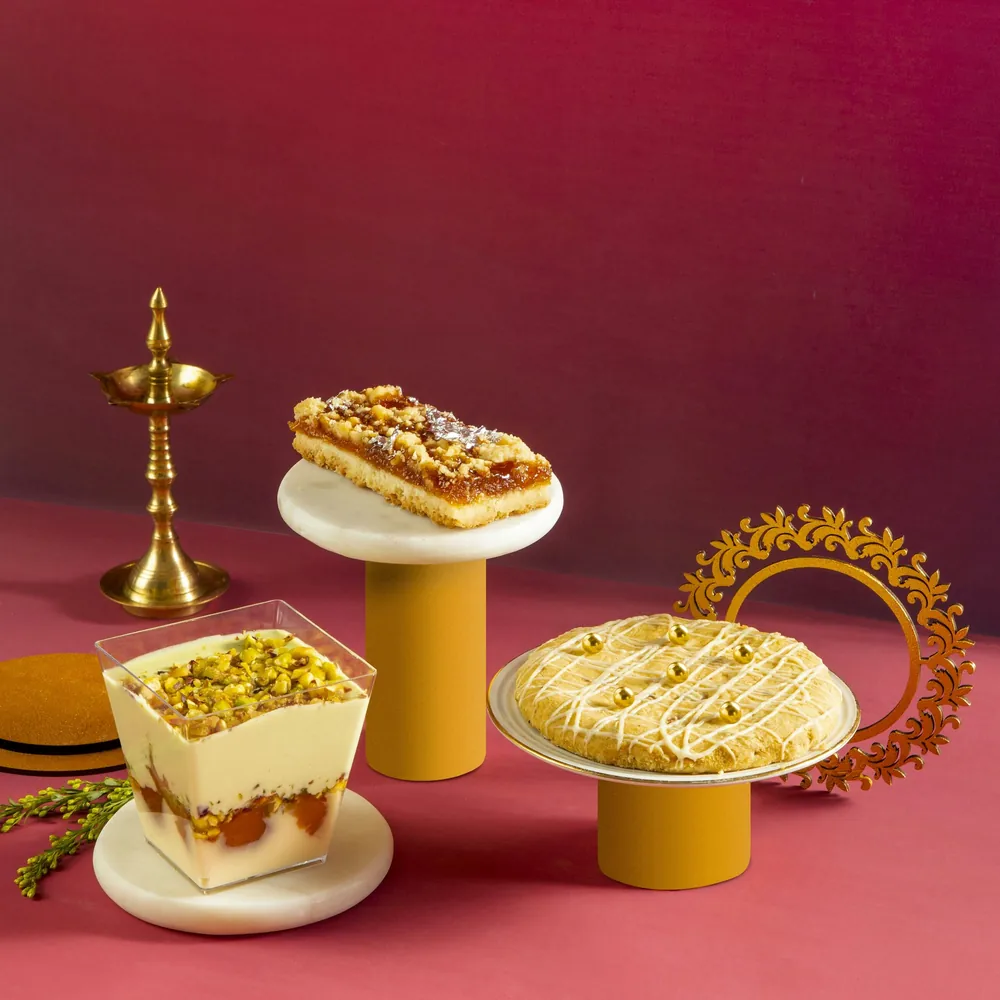
There's something comforting about making sweets at home. The smell of besan roasting in ghee, a pot of kheer bubbling gently on the stove, or warm suji halwa served straight from the kadai can make an ordinary afternoon feel special.
And the good thing is, you don't need an oven.
Many traditional Indian desserts are prepared with equipment you probably already have: a saucepan, a kadai, a spoon, and sometimes a refrigerator.
Some recipes take just twenty minutes. Others need a little patience, particularly when you're reducing milk or roasting flour. But none of the ten sweets below requires baking.
Whether you're preparing something for a festival, expecting guests, or simply craving a homemade dessert, there's an option here for you.
These are approximate times. The actual cooking time will depend on your stove, pan, and quantity.
10 Indian Sweets You Can Make Without Baking
| Dessert | Approximate time | Main method |
|---|---|---|
| Besan ladoo | 35 minutes | Slow-roasting gram flour |
| Rice kheer | 45–50 minutes | Simmering rice in milk |
| Coconut barfi | 25 minutes, plus chilling | Cooking and setting |
| Suji halwa | 20 minutes | Roasting semolina |
| Mango shrikhand | 10 minutes active, plus draining and chilling | Mixing strained curd |
| Gajar halwa | 50–60 minutes | Cooking carrots in milk |
| Besan barfi | 30 minutes, plus setting | Roasting and pressing |
| Sewai kheer | 20 minutes | Cooking vermicelli in milk |
| Peanut chikki | 20 minutes, plus cooling | Cooking jaggery syrup |
| Falooda | 15 minutes to assemble | Layering chilled ingredients |
1. Besan Ladoo
<text color="secondary" weight="medium" size="sm">Approximate time: 35 minutes</text> Besan ladoo is the kind of sweet that often appears in Indian homes during Diwali and family celebrations. It needs only a handful of ingredients, but its flavour depends on how well the gram flour is roasted. If you stop too early, the ladoos can have a raw flour taste. Roast it patiently, and the kitchen begins to smell wonderfully nutty.Ingredients
- 2 cups besan (gram flour)
- ½ cup ghee
- ¾ cup powdered sugar
- ½ teaspoon cardamom powder
- 2 tablespoons chopped cashews and almonds
Method
- Place a heavy-bottomed kadai over low heat and add the ghee.
- When the ghee melts, add the besan. Stir thoroughly to break up lumps.
- Roast gently for about 18–22 minutes, stirring continuously. The flour should develop an even golden colour and a nutty aroma.
- Turn off the heat and let the mixture cool until it's warm, not hot.
- Add powdered sugar, cardamom powder, and chopped nuts.
- Mix well, then take small portions and roll them into ladoos.
2. Rice Kheer
<text color="secondary" weight="medium" size="sm">Approximate time: 45–50 minutes | Serves: 4</text> Rice kheer is one of those desserts that tastes like home. Milk, rice, and sugar slowly come together to make a creamy pudding, with cardamom and saffron adding fragrance. You can serve it warm after dinner or chilled on a hot afternoon.Ingredients
- 1 litre milk, preferably full-fat
- ¼ cup basmati rice, rinsed
- 4–5 tablespoons sugar, or to taste
- ½ teaspoon cardamom powder
- A few saffron strands soaked in 1 tablespoon warm milk
- 1 teaspoon rose water
- Chopped almonds and pistachios for garnish
Method
- Wash the rice and drain it.
- Heat the milk in a heavy-bottomed pan until it comes to a gentle boil.
- Add the rice, lower the heat, and stir.
- Simmer for 35–40 minutes, stirring regularly so the milk doesn't catch at the bottom.
- Once the rice is soft and the milk has thickened, add the sugar, cardamom, and saffron milk.
- Cook for another five minutes.
- Stir in the rose water and finish with chopped nuts.
3. Coconut Barfi
<text color="secondary" weight="medium" size="sm">Approximate time: 25 minutes, plus 2 hours chilling</text> If you want to prepare mithai without making sugar syrup, coconut barfi is worth trying. This version uses condensed milk to sweeten and bind the coconut. Once the mixture thickens, all that's left is spreading it in a tray and allowing it to set.Ingredients
- 2 cups unsweetened desiccated coconut
- 1 cup sweetened condensed milk
- ½ teaspoon cardamom powder
- 1 tablespoon ghee for greasing
- Chopped pistachios, optional
Method
- Grease a shallow steel tray with a little ghee.
- Add the coconut and condensed milk to a heavy-bottomed or non-stick pan.
- Cook over low heat, stirring frequently.
- After approximately 10–12 minutes, the mixture should become noticeably thicker and start leaving the sides of the pan.
- Add cardamom powder and mix.
- Transfer to the greased tray and press into an even layer about 1 cm thick.
- Let it cool briefly, then refrigerate until firm.
- Cut into squares or diamonds and garnish with pistachios.
4. Suji Halwa (Sheera)
<text color="secondary" weight="medium" size="sm">Approximate time: 20 minutes | Serves: 3–4</text> Suji halwa is useful to know because you can make it with ingredients that are often already in the kitchen. It's served at festivals, prepared as prasad in many households, and enjoyed as a warm dessert with very little planning. The trick is to roast the semolina properly before adding liquid.Ingredients
- 1 cup suji (semolina)
- ½ cup ghee
- ¾ cup sugar
- 2 cups hot water or milk
- ½ teaspoon cardamom powder
- 10–12 cashews
- A small handful of raisins
Method
- Heat the ghee in a kadai.
- Add the cashews and raisins. Fry gently until the cashews are lightly golden and the raisins puff up. Remove and set aside.
- Add the suji to the remaining ghee.
- Roast over low heat for 8–10 minutes, stirring regularly, until aromatic and lightly golden.
- Carefully pour in the hot water or milk a little at a time, stirring continuously. The mixture may splutter.
- Add sugar and cardamom.
- Continue stirring over low heat until the halwa thickens and comes together.
- Garnish with the fried nuts and raisins.
5. Mango Shrikhand
<text color="secondary" weight="medium" size="sm">Active preparation: 10 minutes | Plus refrigeration time</text> Mango shrikhand is a lovely dessert for summer, especially when sweet, ripe mangoes are available. There's no stovetop cooking involved. You simply mix thick strained curd with mango pulp, sugar, and a little cardamom. The main preparation is draining the curd so the finished shrikhand becomes thick rather than watery.Ingredients
- 500 g plain full-fat curd
- ½ cup fresh mango pulp
- 4–5 teaspoons powdered sugar, adjusted to taste
- ½ teaspoon cardamom powder
- A few saffron strands soaked in 1 tablespoon warm milk
- Thin mango slices for garnish
Method
- Line a fine sieve with clean muslin and place it over a deep bowl.
- Add the curd and allow the whey to drain in the refrigerator for approximately six hours or overnight.
- Transfer the thick strained curd, called chakka, into a mixing bowl.
- Add mango pulp and powdered sugar.
- Mix until smooth.
- Stir in the cardamom powder and saffron milk.
- Refrigerate for another hour before serving.
- Garnish with thin mango slices.
6. Gajar Halwa (Carrot Halwa)
<text color="secondary" weight="medium" size="sm">Approximate time: 50–60 minutes | Serves: 4–5</text> Few desserts feel as closely connected with Indian winters as gajar halwa. Freshly grated carrots are cooked with milk and ghee until they become soft, sweet, and rich. It's not a difficult recipe, but you do need to stay nearby and stir the pan as the milk reduces.Ingredients
- 500 g carrots, peeled and grated
- 500 ml full-fat milk
- 4 tablespoons ghee
- ½ cup sugar
- ½ teaspoon cardamom powder
- 2 tablespoons khoya, optional
- Chopped cashews and almonds for garnish
Method
- Heat the ghee in a heavy kadai.
- Add grated carrots and sauté for about 8–10 minutes.
- When the carrots begin softening, pour in the milk.
- Cook over medium-low heat, stirring regularly, until the carrots are tender and most of the milk has reduced.
- Add the sugar. The mixture may become slightly loose again as the sugar dissolves.
- Continue cooking until the excess moisture evaporates.
- Stir in cardamom powder and khoya, if using.
- Garnish with chopped nuts and serve warm.
7. Besan Barfi
<text color="secondary" weight="medium" size="sm">Approximate time: 30 minutes, plus setting</text> Besan barfi uses many of the same ingredients as besan ladoo. The difference is in the finish: instead of rolling the mixture into balls, you press it into a tray and cut it into pieces. This particular version uses powdered sugar rather than a separate sugar syrup, giving it a more delicate, crumbly texture.Ingredients
- 2 cups besan
- ½ cup ghee
- 1 cup powdered sugar
- ½ teaspoon cardamom powder
- Edible silver vark, optional
Method
- Lightly grease a small steel tray with ghee.
- Heat the remaining ghee in a heavy-bottomed kadai.
- Add besan and roast gently over low heat.
- Continue stirring for approximately 20 minutes, until the flour becomes evenly golden and aromatic.
- Remove from the heat and cool slightly.
- Add powdered sugar and cardamom while the mixture is warm but not very hot.
- Mix thoroughly.
- Transfer to the tray and press firmly into an even layer.
- Add edible silver vark if desired.
- Allow it to cool and set before cutting.
8. Sewai Kheer (Vermicelli Pudding)
<text color="secondary" weight="medium" size="sm">Approximate time: 20 minutes | Serves: 4</text> Sewai kheer is what you can make when you're craving kheer but don't want to spend nearly an hour cooking rice. Thin vermicelli softens quickly in milk. Roasting it briefly in ghee gives the dessert a pleasant nutty flavour.Ingredients
- 750 ml full-fat milk
- ½ cup thin vermicelli (sewai)
- 1 teaspoon ghee
- 3–4 tablespoons sugar
- ½ teaspoon cardamom powder
- Chopped almonds and raisins for garnish
Method
- Heat ghee in a saucepan.
- Add the vermicelli and roast gently for 3–4 minutes, until lightly golden. If it's already roasted, shorten this step.
- Pour in the milk and bring it to a gentle boil.
- Lower the heat and simmer for about 10–12 minutes, stirring occasionally.
- Once the vermicelli is cooked and the milk has thickened slightly, add sugar and cardamom.
- Cook for another two or three minutes.
- Garnish with almonds and raisins.
9. Peanut Chikki
<text color="secondary" weight="medium" size="sm">Approximate time: 20 minutes, plus cooling</text> Peanut chikki is especially associated with Lonavala, though you'll find versions of it in many parts of India. It's made with roasted peanuts and jaggery, and the result should be crisp enough to snap into pieces. The ingredient list is short. Getting the jaggery syrup to the right stage is the part that needs attention.Ingredients
- 1 cup roasted peanuts, skins removed
- ¾ cup jaggery, grated or broken into small pieces
- 1 tablespoon water
- A little ghee for greasing
Method
- Grease a flat steel plate or another suitable heat-safe surface. Keep a greased rolling pin ready.
- Place the jaggery and water in a heavy-bottomed pan.
- Heat gently until the jaggery melts.
- Continue cooking until a small drop of syrup placed in cold water becomes hard and brittle after cooling.
- Add the roasted peanuts and stir quickly to coat them.
- Immediately transfer the mixture onto the greased surface.
- Flatten carefully using the rolling pin.
- Score into squares while the mixture is still workable.
- Leave it to cool completely, then separate the pieces.
10. Falooda
<text color="secondary" weight="medium" size="sm">Assembly time: 15 minutes | Serves: 2</text> Falooda is different from the other sweets on this list. Rather than a traditional piece of mithai, it's a chilled dessert drink served in a tall glass. Rose syrup, milk, vermicelli, basil seeds, and ice cream come together in colourful layers. It's especially enjoyable during summer.Ingredients
- 2 teaspoons sabza (basil) seeds
- ½ cup cooked and chilled thin vermicelli
- 4 teaspoons rose syrup, or to taste
- 1 cup chilled full-fat milk
- 2 scoops vanilla ice cream
- Chopped pistachios and almonds
- Cherries for garnish, optional
Method
- Soak the sabza seeds in clean water for about 15 minutes, until fully swollen. Drain excess water.
- Cook the vermicelli according to its package instructions and let it cool completely.
- Divide the rose syrup between two tall glasses.
- Add the chilled milk.
- Divide the cooked vermicelli between the glasses.
- Add a spoonful of soaked sabza seeds to each.
- Place a scoop of vanilla ice cream on top.
- Finish with chopped nuts and a cherry if using.
Which Dessert Should You Make First?
If you're new to homemade Indian sweets, you don't need to begin with the most elaborate recipe. Suji halwa is a useful first choice because its ingredients are familiar and the cooking process is relatively quick. Sewai kheer is another good option for a weeknight. Besan ladoo takes more patience, but once you understand the roasting stage, the method becomes easier to repeat. For a chilled dessert, mango shrikhand is straightforward if you prepare the strained curd in advance. Peanut chikki is better attempted when you can give the hot jaggery syrup your full attention.A Few Things That Make Homemade Sweets Better
Watch the Mixture, Not Just the Clock
Cooking times are helpful, but they aren't exact. Besan should smell properly roasted. Kheer should have soft rice and slightly thickened milk. A barfi mixture needs the right consistency before it's transferred to a tray. Those signs tell you more than the timer alone.Keep the Heat Under Control
High heat isn't always faster in a useful way. Milk can scorch, flour can burn, and jaggery can turn bitter. A steady, manageable flame gives you more control, especially when you're making sweets for the first time.Prepare Ingredients Before Cooking
Measure everything before you start. This matters most for recipes such as chikki, where there's little time to search for utensils once the jaggery reaches the correct stage.Start With Small Quantities
If you're unsure about a recipe, try a smaller batch. You'll learn how your own stove and cookware behave without using a large amount of ingredients.Store Milk-Based Desserts Properly
Kheer, shrikhand, falooda, and other dairy-rich sweets should be refrigerated promptly in clean, covered containers. Keep your refrigerator at approximately 4°C or below, and avoid leaving perishable sweets at room temperature for extended periods. Drier sweets have different keeping qualities, but their shelf life still depends on ingredients, moisture, temperature, and hygiene.Frequently Asked Questions
Can I make Indian sweets without an oven?
Yes. Many traditional sweets are cooked in a kadai or saucepan, while others are mixed and refrigerated. Besan ladoo, kheer, barfi, and halwa are common examples.Which Indian dessert is the easiest for beginners?
Suji halwa and sewai kheer are good starting points because they use familiar ingredients and don't require complicated shaping or syrup work.Can I prepare barfi without baking?
Yes. Many types of barfi are cooked on the stove and allowed to set. Getting the mixture's consistency right is important for clean slices.Which dessert is good for summer?
Mango shrikhand, falooda, and chilled kheer are popular choices for warm weather.Why do my besan ladoos taste raw?
The besan may not have been roasted long enough. Cook it slowly until the raw flour smell disappears and a nutty aroma develops.Why isn't my barfi setting?
It may contain too much moisture, or the ingredients may not be binding properly. The exact solution depends on the type of barfi and how its mixture was prepared.Final Thoughts
Making Indian desserts at home is often simpler than it first appears. You don't need an oven, fancy baking tools, or a cupboard full of unusual ingredients. A few everyday ingredients and an ordinary kadai can produce some wonderful sweets. Start with something manageable, like suji halwa or sewai kheer. When you're comfortable with those, move on to sweets that need more attention, such as besan ladoo, barfi, or peanut chikki. The best results usually come from paying attention to small things: the smell of roasted flour, the consistency of reduced milk, or the way a mixture begins to set. And sometimes, a simple homemade bowl of kheer is exactly the dessert you wanted.Related Articles
- 10 Easy Indian Breakfast Recipes Ready in Under 20 Minutes
- Air Fryer Pakora: How to Make Crisp Pakoras With Less Oil
- Easy Homemade Indian Sweets for Festivals
— END OF STORY —
Have a factual correction or suggestion? Get in touch.